“Because they feel in control of their situation and can balance their lives, they will be happier and more productive at work,” one of the surveyed leaders said.
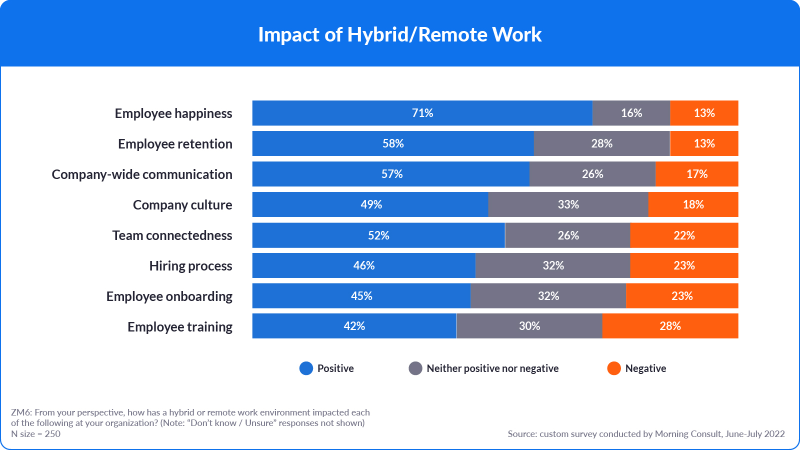
Workspace flexibility has a fairly positive ripple effect, according to the leaders surveyed. Morning Consult’s findings revealed that the impact of hybrid and remote workplaces has been perceived by leaders as much more positive than negative, particularly when it comes to employee happiness and the quality of connections.
Seventy-one percent believe hybrid and remote work has had a positive impact on employee happiness, 58% on employee retention, 57% company-wide communication, and 52% on team connectedness.
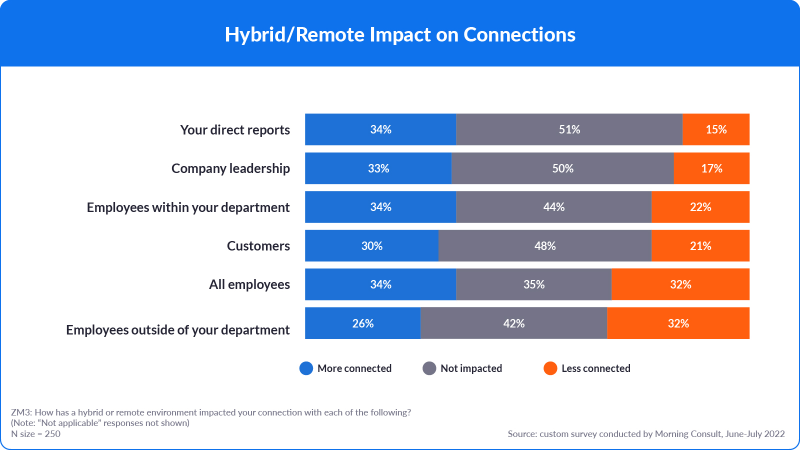
In fact, a common survey theme was that remote and hybrid work has mostly strengthened or not impacted co-worker connections and the quality of those connections. Thirty-four percent feel more connected with direct reports due to remote work, whereas 51% feel no impact either way.
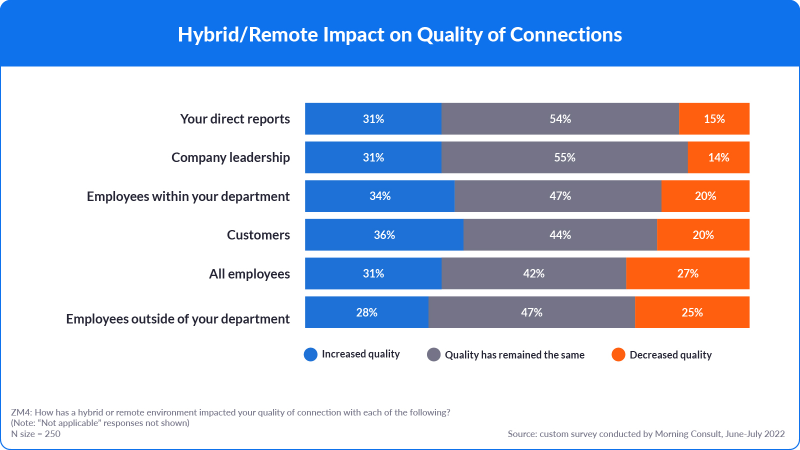
A similar story emerged for the quality of connections as well. Thirty-one percent feel like remote work has increased the quality of the connections they have with direct reports and 54% feel the quality has remained the same, whereas 31% feel that remote work has increased the quality of the connections with company leadership and 55% feel the quality has remained the same.
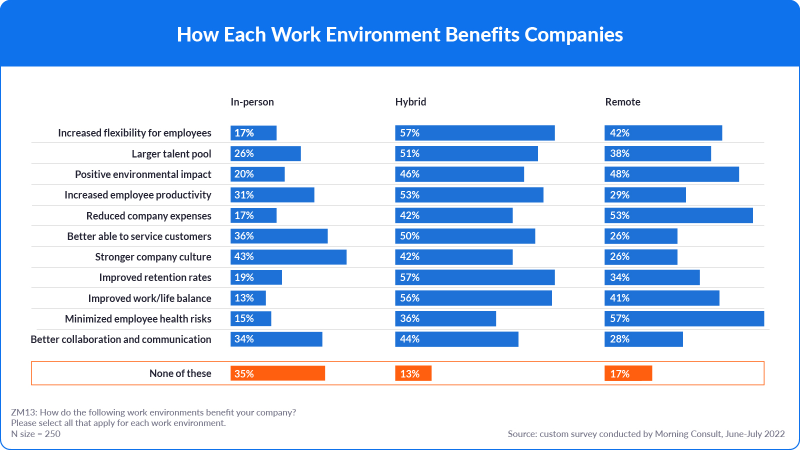
It’s little surprise that these senior leaders identified more benefits in remote and hybrid workplaces than in-person environments. When provided with a list of potential benefits to each work environment, 35% of leaders surveyed selected “None of these” for in-person work, compared with 13% for hybrid work, and 17% for fully remote work. The top benefits of hybrid work include increased flexibility for employees (57%), improved retention rates (57%), improved work/life balance (56%), and increased productivity (53%).
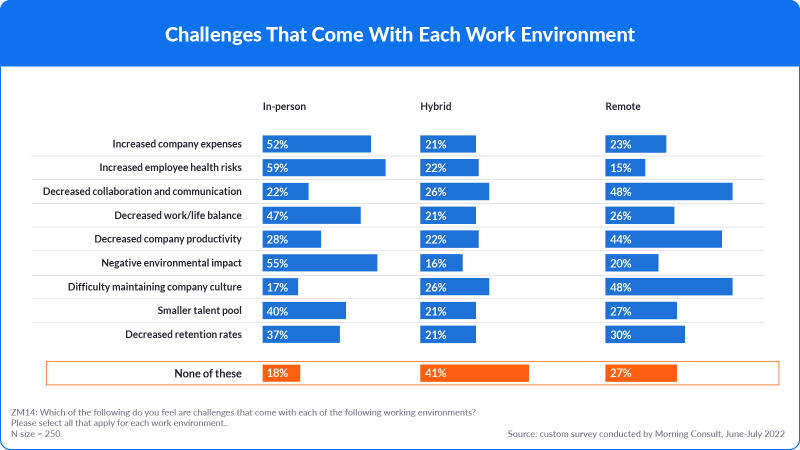
Similarly, more challenges were identified with in-person work than with hybrid and remote work. When provided with a list of potential challenges to each work environment, 18% of leaders surveyed selected “None of these” for in-person work, compared with 41% for hybrid work, and 27% for remote work. The top challenges identified for in-person work included increased health risks (59%), negative environmental impact (55%), and increased company expenses (52%).