



🚀 NEW My notes, your AI note taker
Automatically captures, summarizes, and extracts action items from any virtual or in-person meeting. Learn more

When developers embed real-time communication into their applications, SDK quality determines whether users experience seamless, reliable interactions or face frustrating disruptions. Unlike standalone meeting apps, SDKs must deliver consistent audio, video, and data performance across varied devices, networks, and integration scenarios—all while staying lightweight and developer-friendly. This report evaluates the SDK quality of leading vendors to understand how each performs under real-world conditions and where meaningful differences emerge:
TestDevLab (TDL) offers software testing & quality assurance services for mobile, web, and desktop applications and custom testing tool development. They specialize in software testing and quality assurance, developing advanced custom solutions for security, battery, and data usage testing of mobile apps. They also offer video and audio quality assessment for VoIP or communications apps and products for automated backend API, as well as web load and performance testing.
TestDevLab team comprises 500+ highly experienced engineers who focus on software testing and development. The majority of their test engineers hold International Software Testing Qualifications Board (ISTQB) certifications, offering a high level of expertise in software testing according to industry standards and service quality.
To ensure a fair and repeatable comparison across vendors, tests were conducted under controlled conditions that reflect realistic application scenarios. Each SDK was evaluated with the same set of devices, network limitations, and playback materials to isolate differences in SDK performance rather than environmental factors.
All products tested were at their latest releases as of July 2025.
Tests were performed across a consistent hardware set to reflect both desktop and mobile scenarios:
Each SDK was stressed across varying network constraints to capture quality under both ideal and degraded conditions:
Each scenario followed the same step-by-step process to ensure consistency across vendors:
This approach allowed testers to gather synchronized video, audio, and performance data from each session.
To build a complete picture of SDK performance, multiple data streams were captured during each test:
Tests were standardized across platforms to minimize external variables:
The evaluation focused on two primary quality attributes:
To provide a complete picture of SDK quality, TestDevLab used two complementary evaluation methods:
All test sessions were prepared as receiver-side recordings with anonymized filenames to prevent bias. Videos were cropped to exclude UI elements and scaled to 720p for consistency:
Participants and environment
To approximate a natural user experience, tests were viewed on calibrated devices (iPhone 14 for mobile, MacBook Pro for desktop) in neutral lighting. Ten participants with varying visual acuity, technical expertise, and viewing habits provided independent evaluations.
Scoring methodology
Quality was measured using Absolute Category Rating (ACR), where each video was rated independently on a 5-point scale:
This combination of controlled testing, diverse participant feedback, and standardized scoring provided a robust foundation for comparing SDK quality across vendors.
Testing across varied conditions highlighted several scenarios where Zoom’s SDKs clearly outperformed competitors. These results underscore Zoom’s ability to deliver resilient, high-quality experiences under challenging network environments.
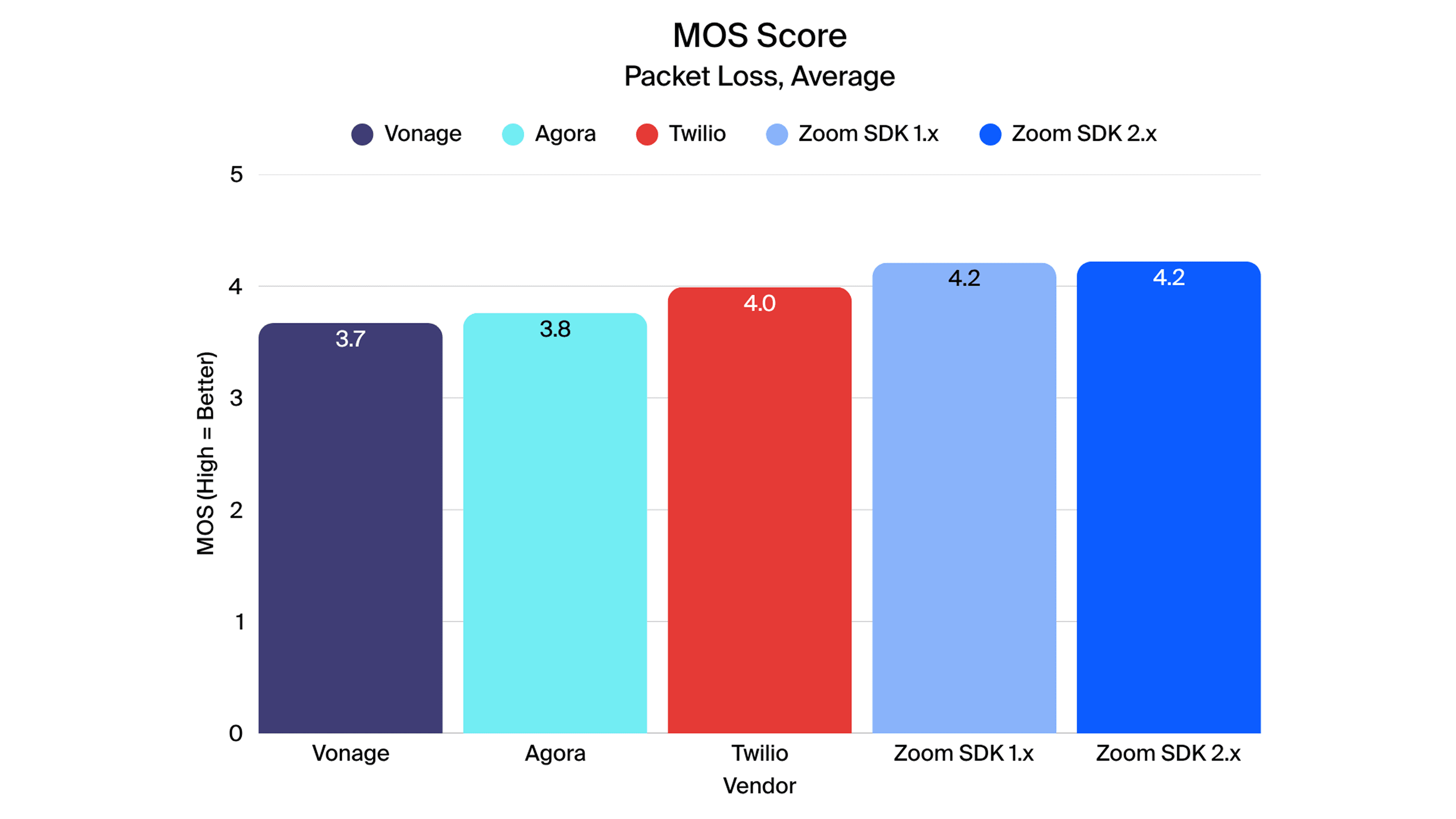
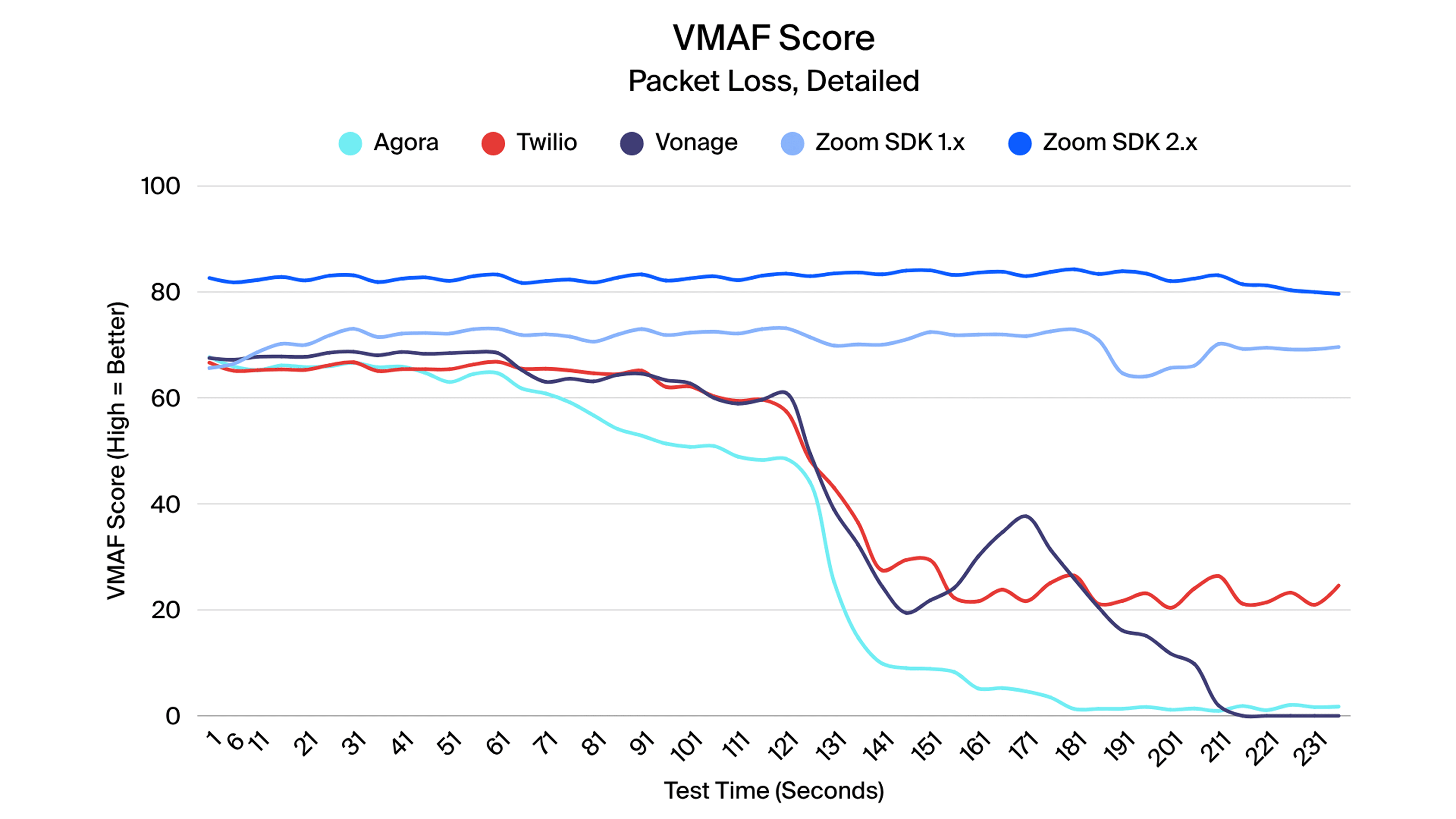
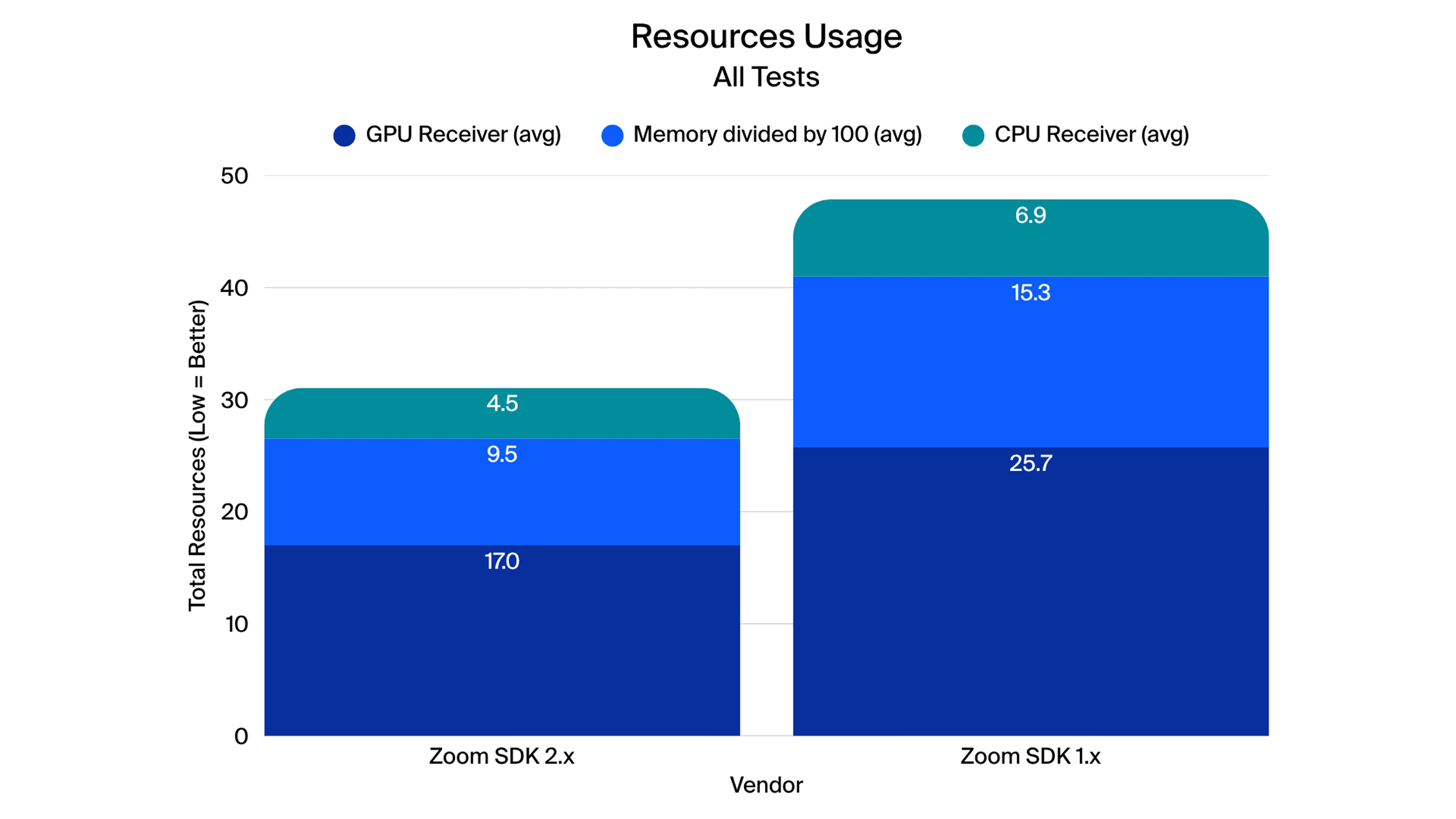
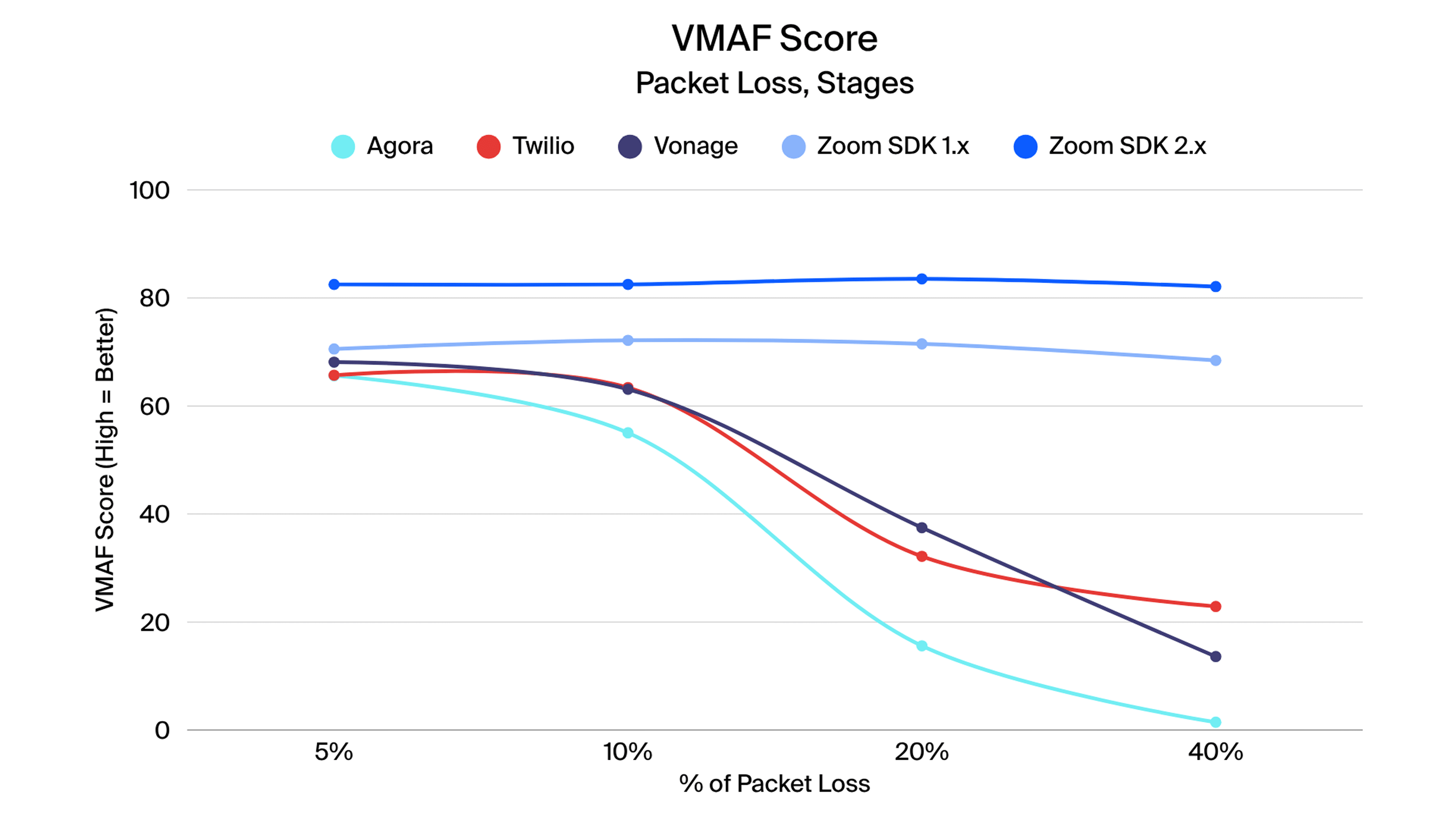
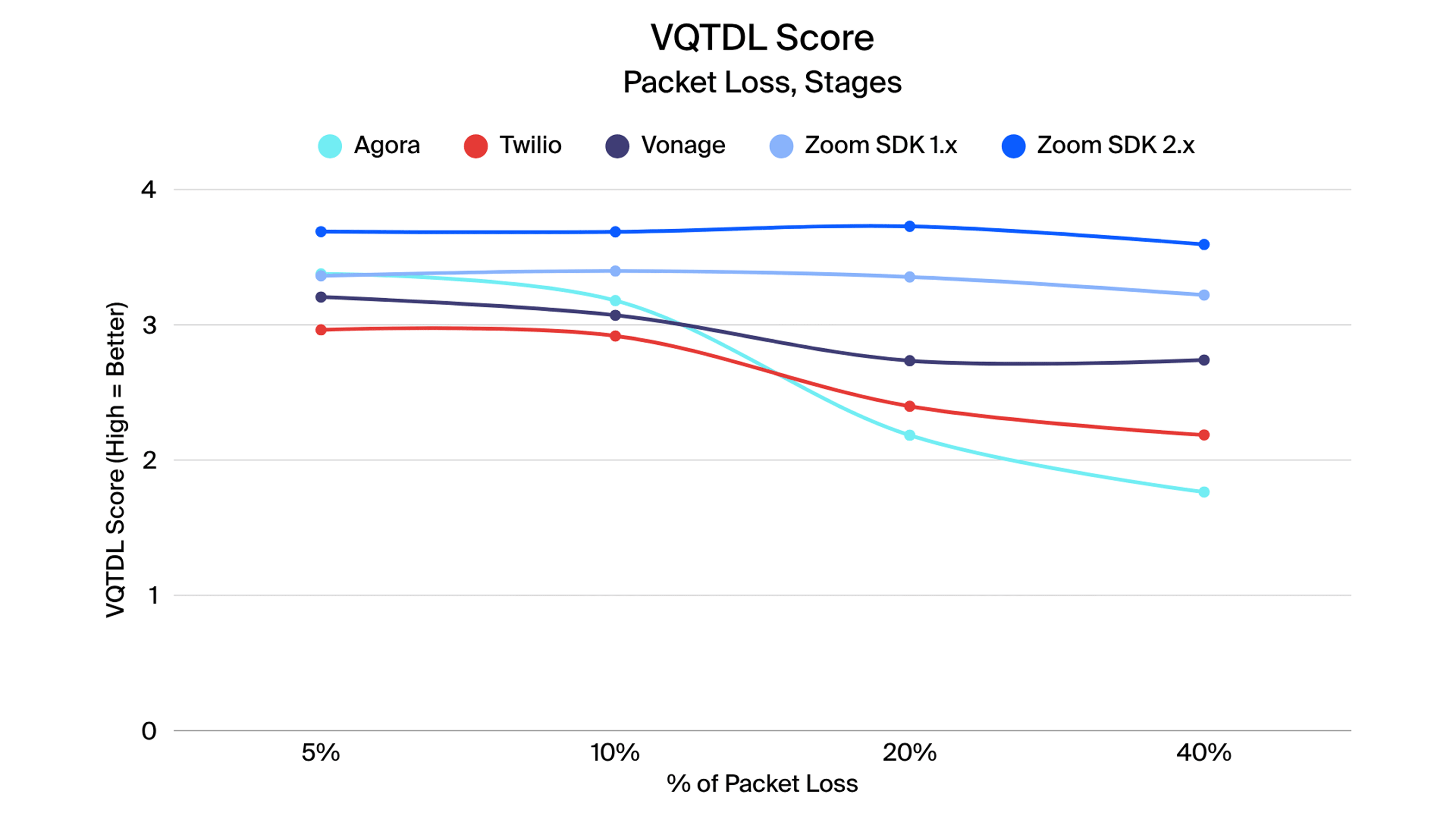

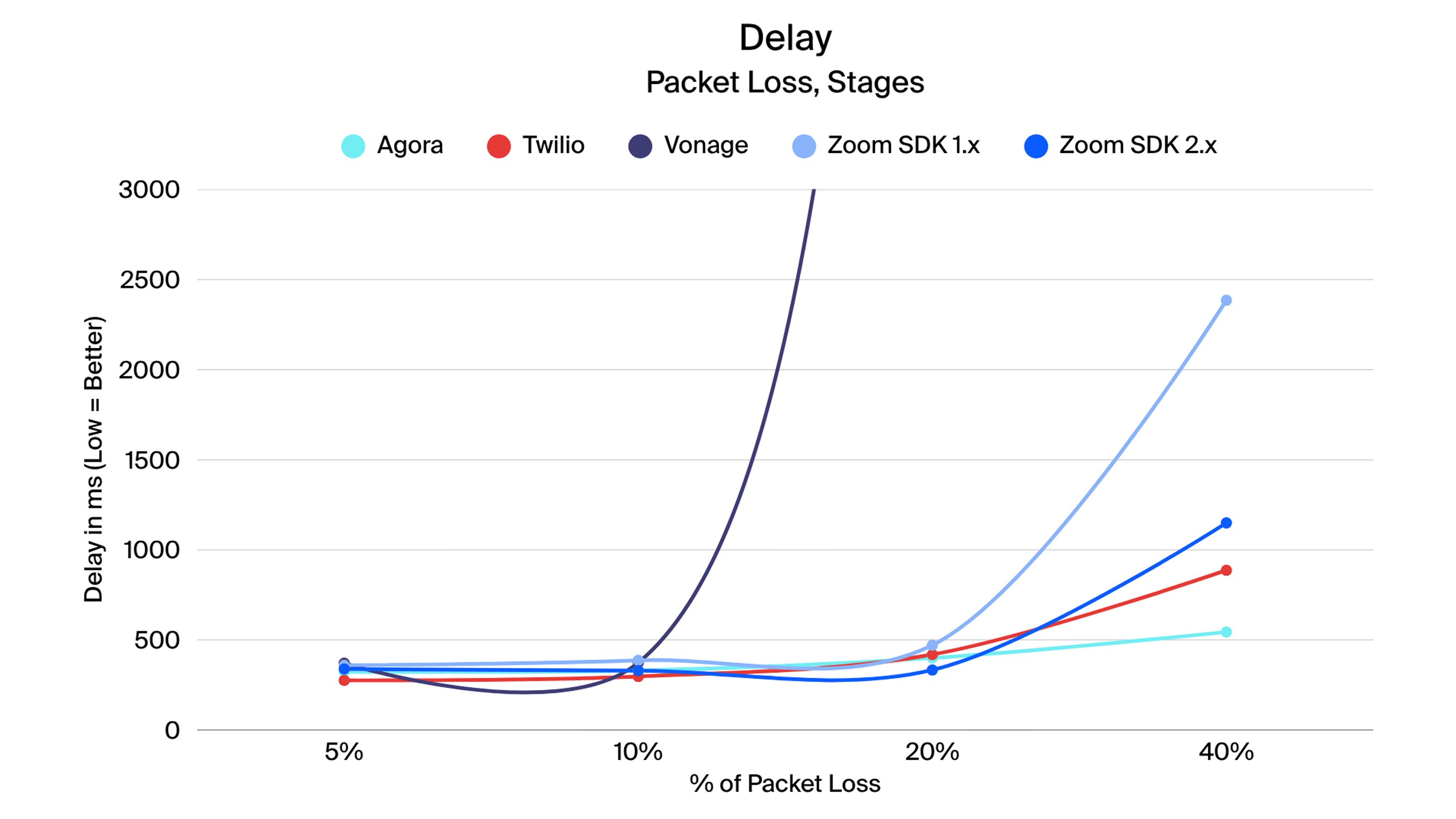

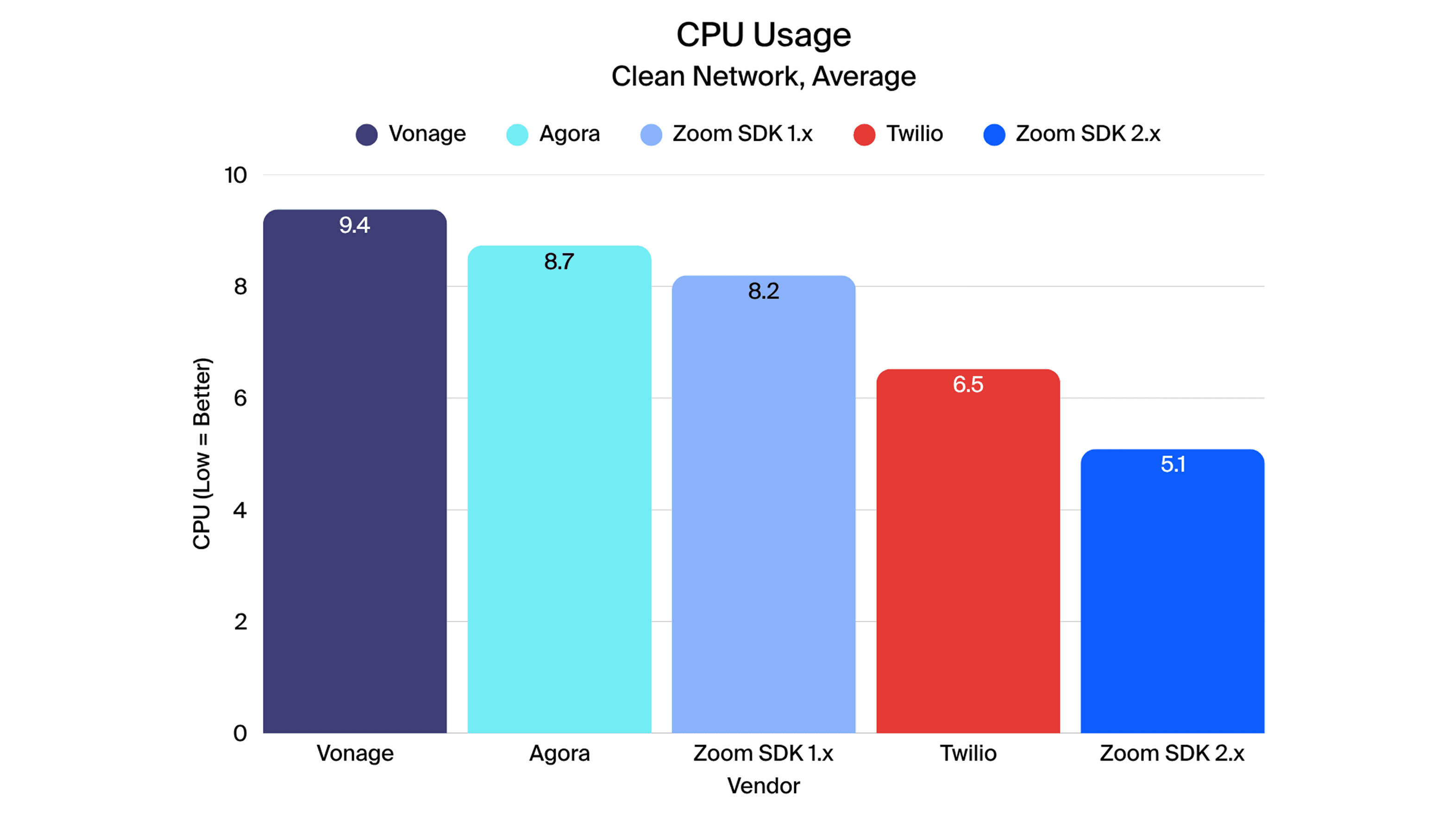
The testing confirms that SDK quality is not equal across vendors. While most platforms deliver acceptable performance in unconstrained environments, differences become clear under stress conditions. Across packet loss, bandwidth limitations, and multi-user layouts, Zoom’s SDKs consistently provided a more resilient and stable experience.
No SDK was immune to challenges at extreme packet loss or severe bandwidth constraints. However, Zoom distinguished itself by striking the best balance between maintaining quality and minimizing disruption. For developers embedding communications into their applications, these results suggest that Zoom’s SDKs for Web offer a more dependable foundation for delivering consistent, real-world user experiences.