



🚀 NEW My notes, your AI note taker
Automatically captures, summarizes, and extracts action items from any virtual or in-person meeting. Learn more

Audio quality is at the core of every phone call. When clarity is reduced, or when audio is delayed or drops entirely, the experience is degraded, leading to frustration. To understand how Zoom Phone compares with other leading cloud telephony solutions, Zoom commissioned TestDevLab to conduct an independent evaluation. Test scenarios included clean and impaired networks, congestion events, packet loss, and noisy environments across desktop and mobile platforms. The following providers were evaluated:
The findings in this report reflect TestDevLab’s testing results from July 2025.
TestDevLab (TDL) offers software testing & quality assurance services for mobile, web, and desktop applications and custom testing tool development. They specialize in software testing and quality assurance, developing advanced custom solutions for security, battery, and data usage testing of mobile apps. They also offer video and audio quality assessment for VoIP or communications apps and products for automated backend API, as well as web load and performance testing.
TestDevLab team comprises 500+ highly experienced engineers who focus on software testing and development. The majority of their test engineers hold International Software Testing Qualifications Board (ISTQB) certifications, offering a high level of expertise in software testing according to industry standards and service quality.
To provide a comprehensive view of call quality, TestDevLab (TDL) captured a range of metrics covering audio performance and network utilization. Data points were sampled continuously during each call and aggregated into a central dataset for analysis.
Not all metrics could be captured across all platforms. For example, CPU and memory data were collected on macOS but not on mobile clients. TDL maximized the set of metrics collected per platform while ensuring comparability across vendors.
To provide a comprehensive view of Zoom Phone performance compared to other cloud telephony solutions, TestDevLab (TDL) conducted tests across the most common call scenarios using representative desktop and mobile devices. Each test was run on current application versions, with controlled impairments introduced to measure how platforms adapt to varying conditions.
To evaluate audio performance, calls were placed under a range of controlled network conditions designed to replicate real-world environments.
Testing followed a standardized process to ensure repeatability across all scenarios.
Across all platforms and scenarios, Zoom consistently delivers leading audio performance, with clear advantages under network stress conditions. Key takeaways from the study include:
3. Stable quality under congested conditions
macOS
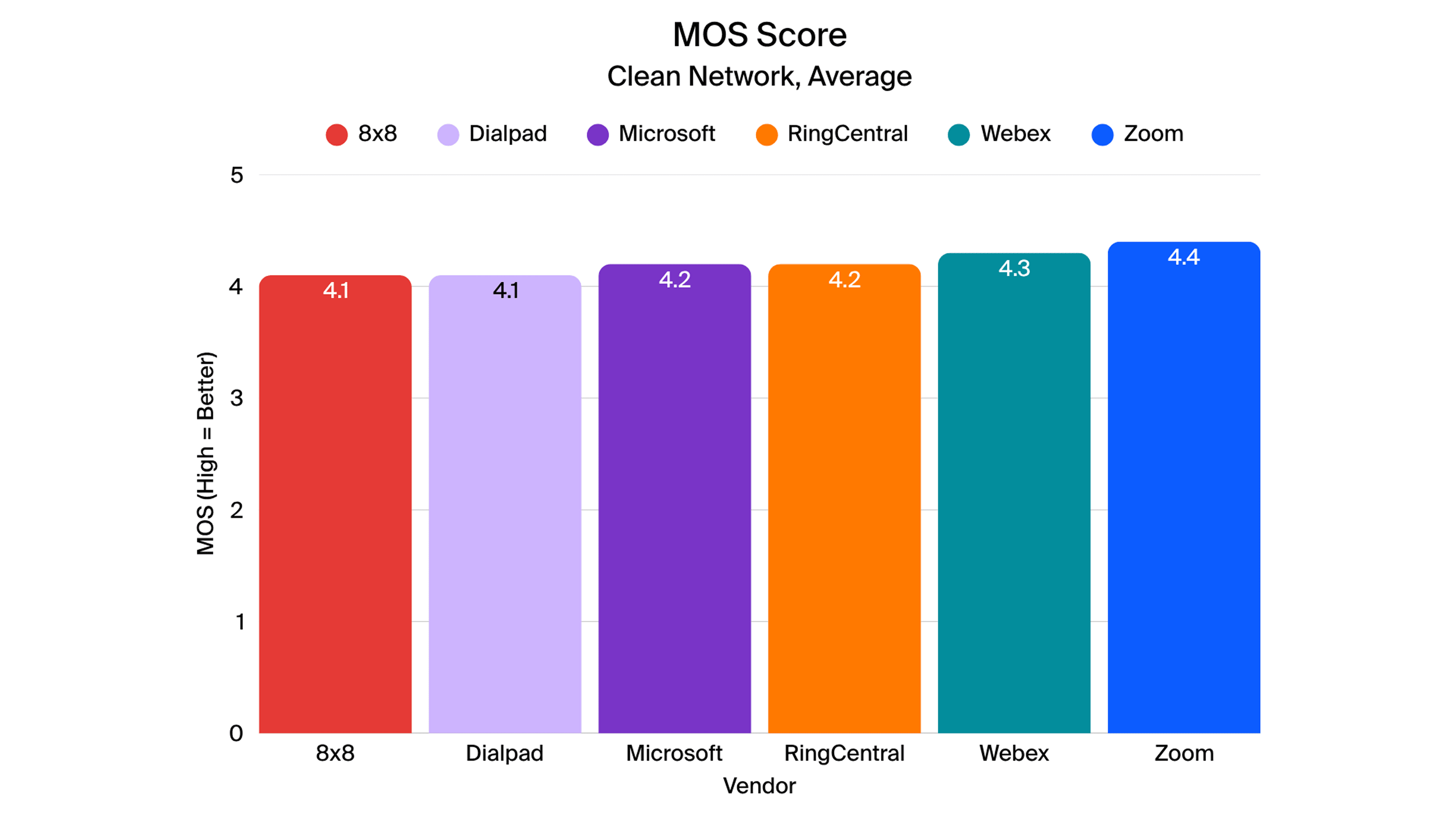
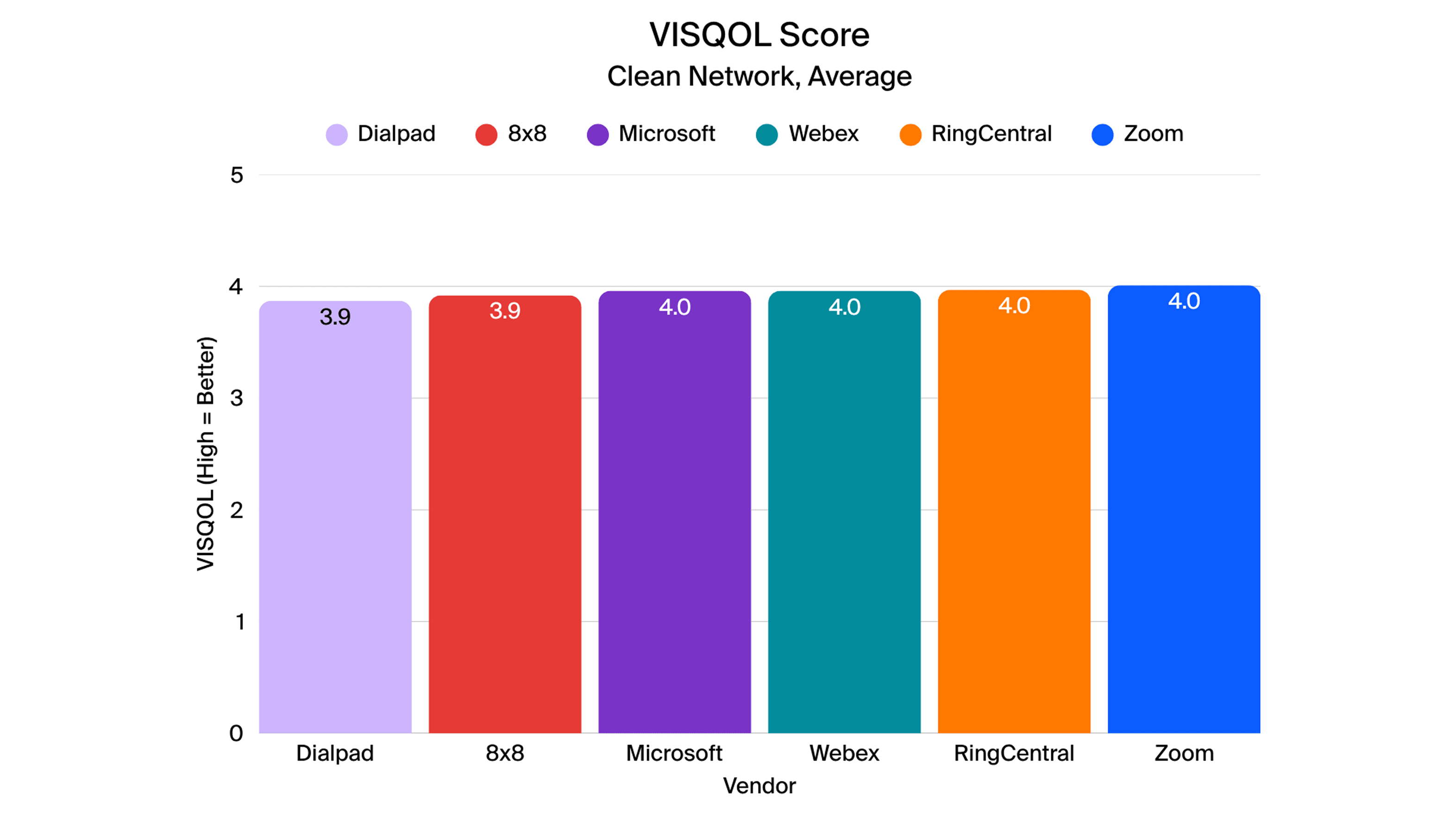
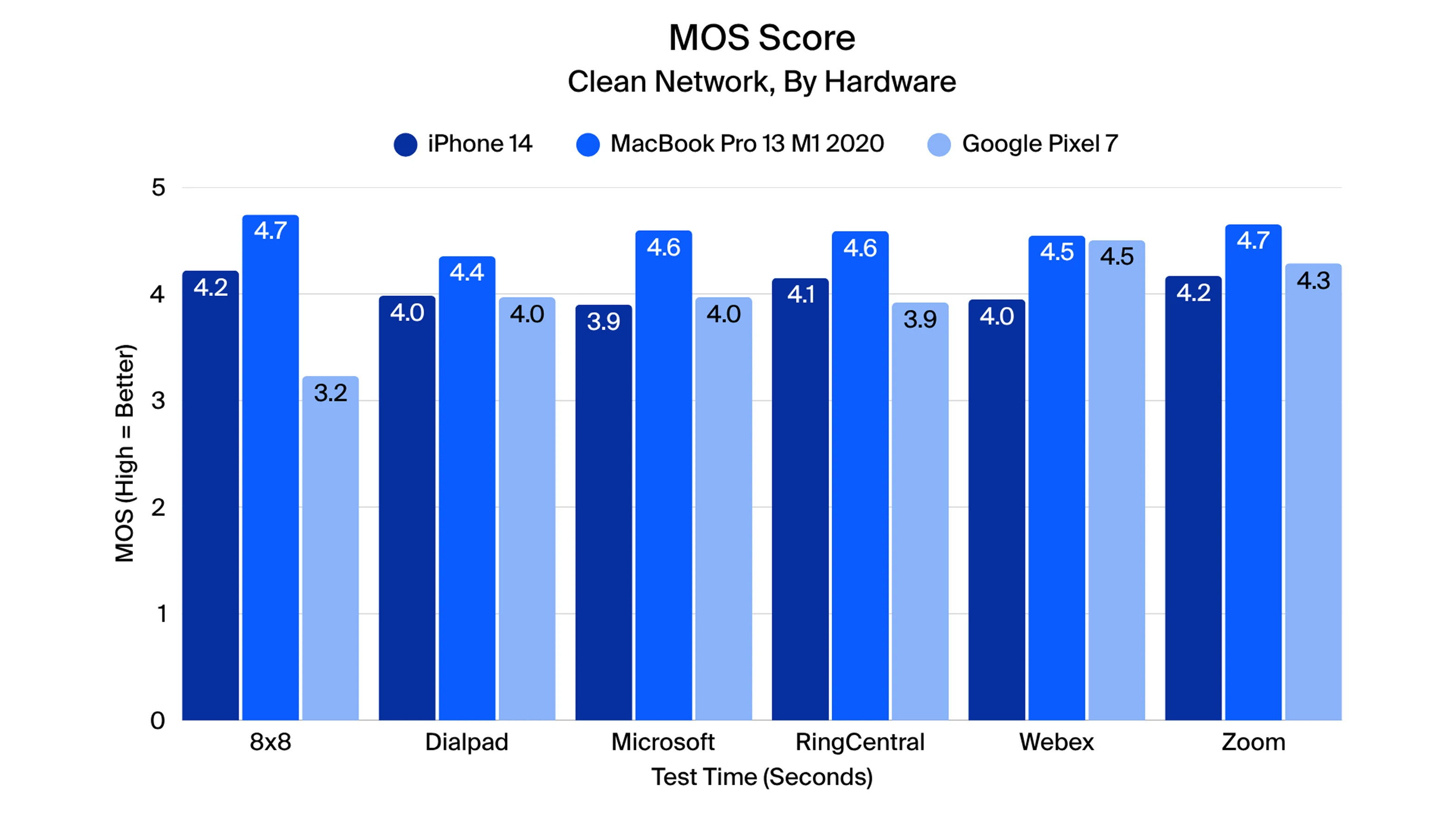
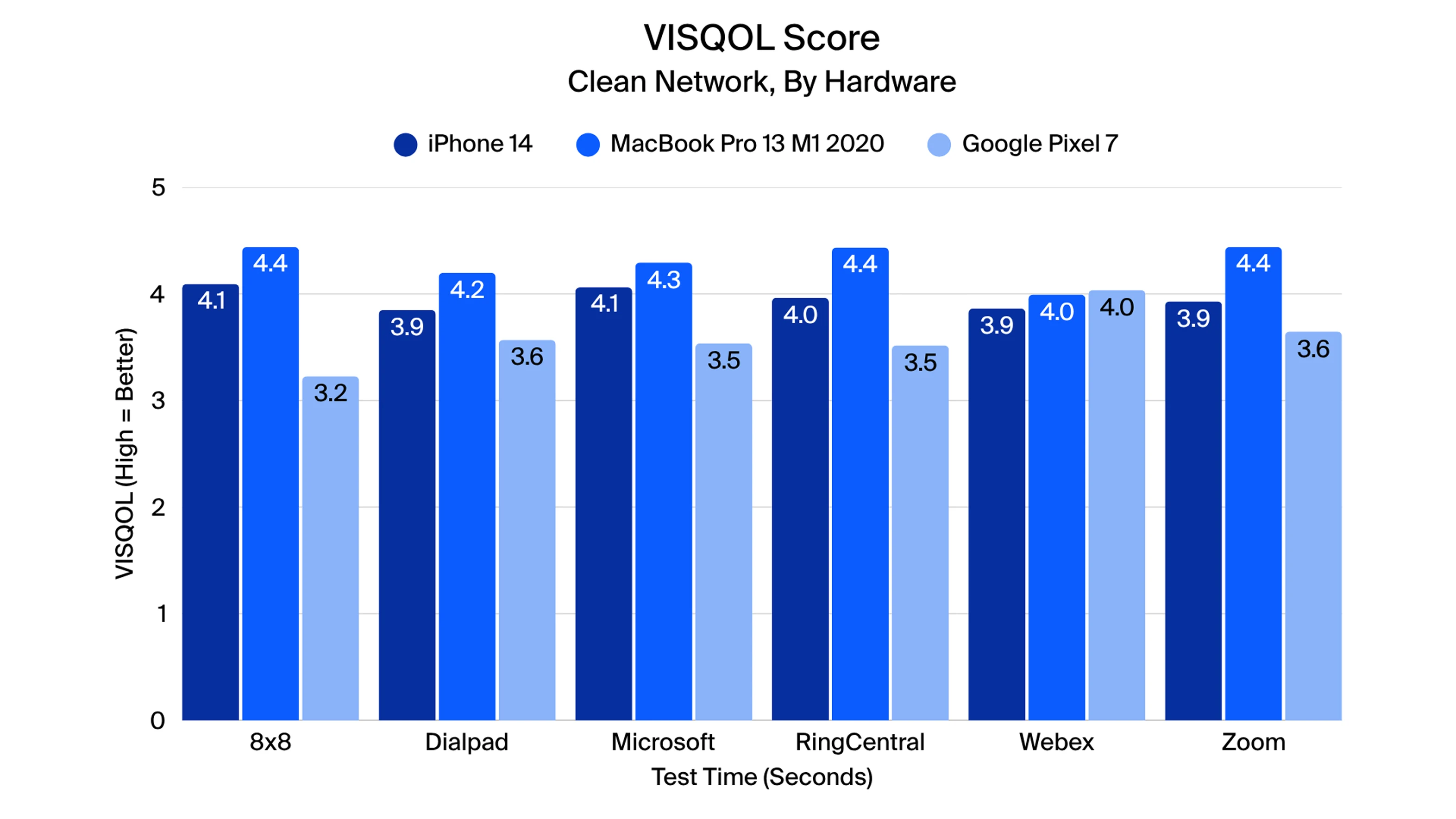
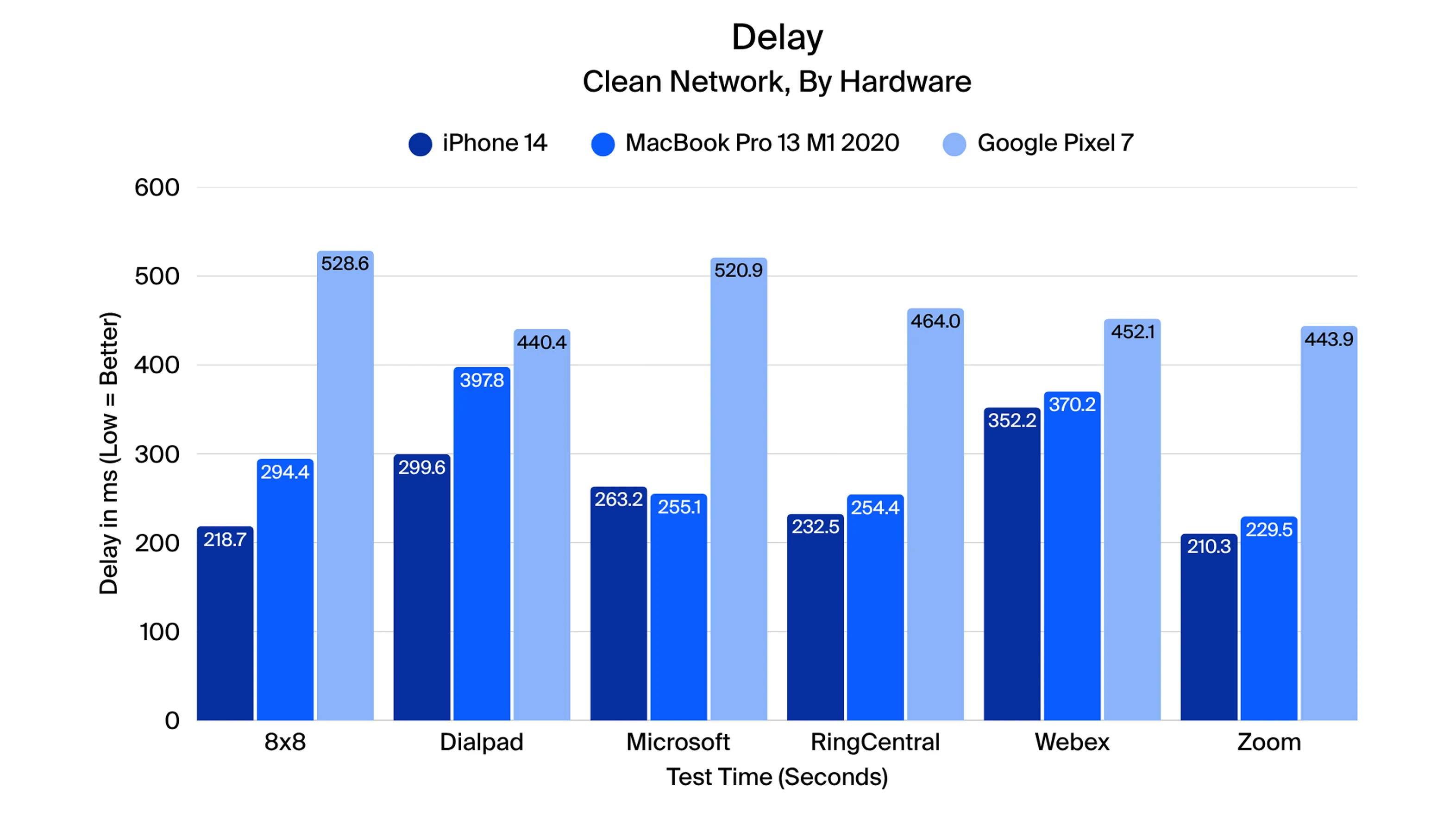
All applications demonstrated excellent audio quality under stable network conditions. Zoom led with the lowest audio delay, making it one of the most responsive platforms for macOS users. VISQOL results generally aligned with POLQA, although Webex showed slightly lower VISQOL scores. Network usage across apps was largely consistent, with minor variations: 8x8 and Dialpad used slightly less bandwith on the sender side, while Webex used slightly more bandwith.
Android
Zoom and Webex maintained strong audio quality, though audio delay was higher for both than on macOS. Zoom remained among the top performers, and VISQOL results closely followed POLQA trends. Network consumption patterns mirrored those seen on macOS.
iOS
Zoom again demonstrated excellent audio quality with the lowest delay, confirming consistent performance across the Apple devices used for testing. Other apps also performed well, and network usage was similar to other platforms.
macOS
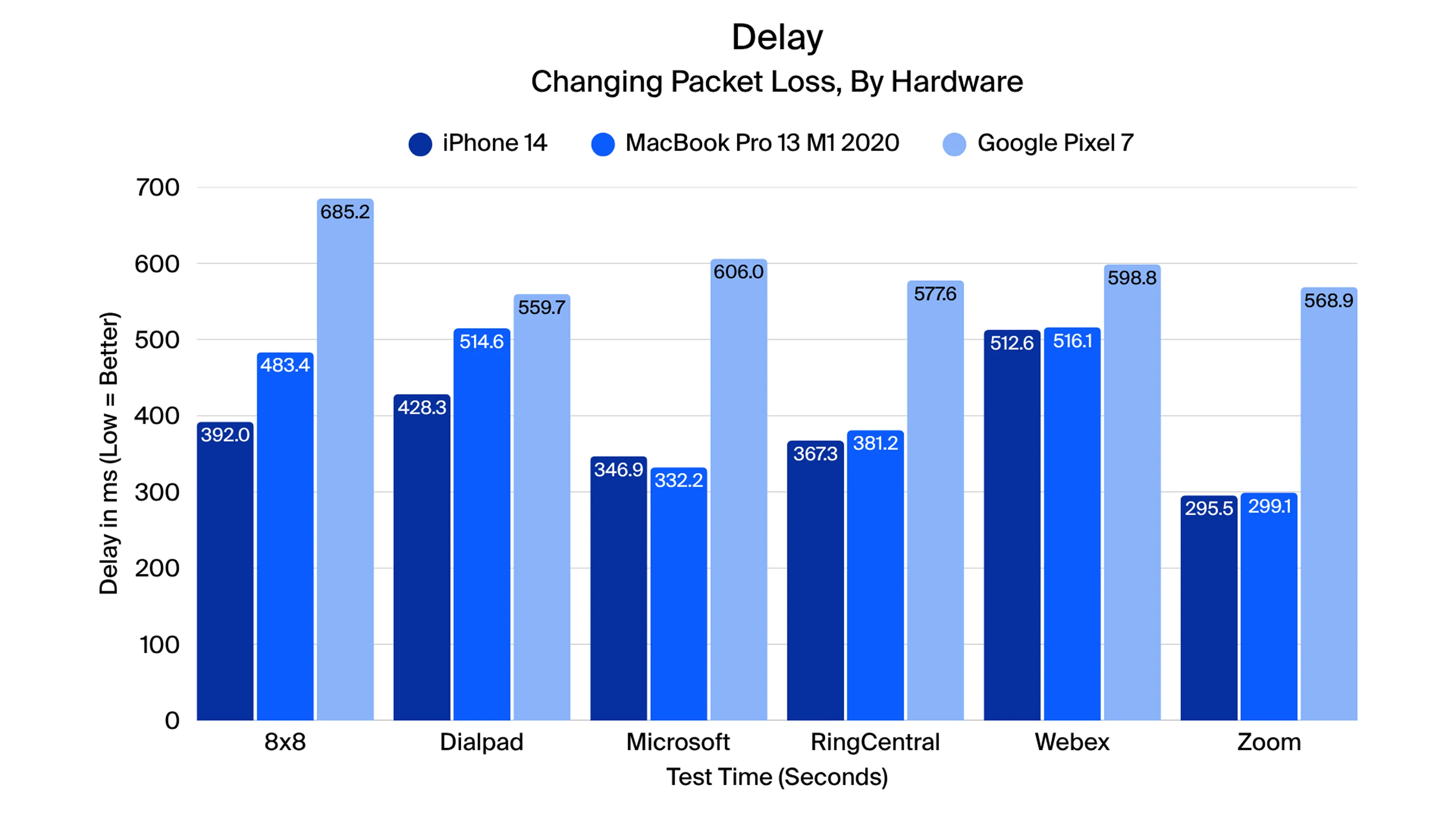
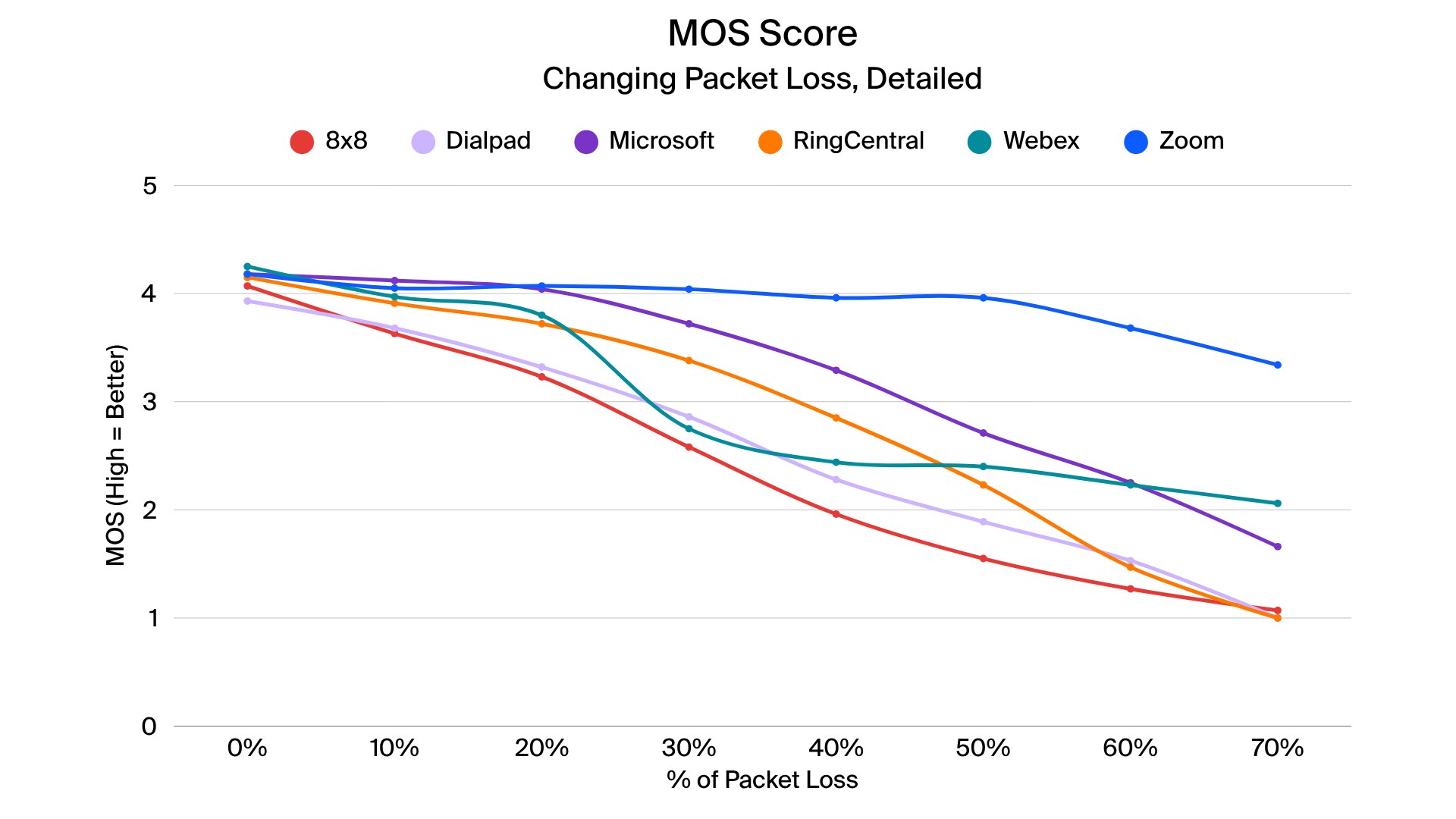
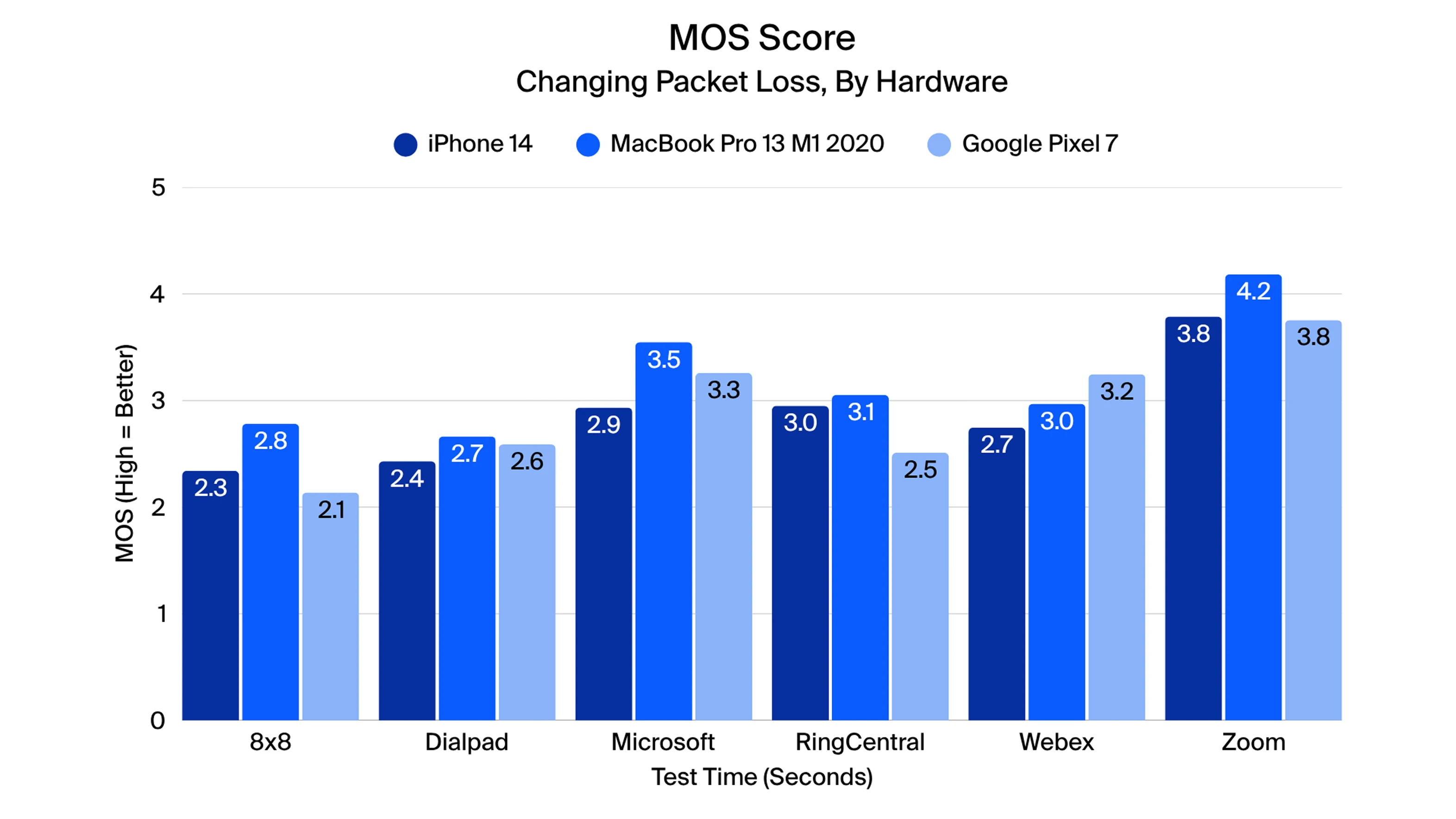
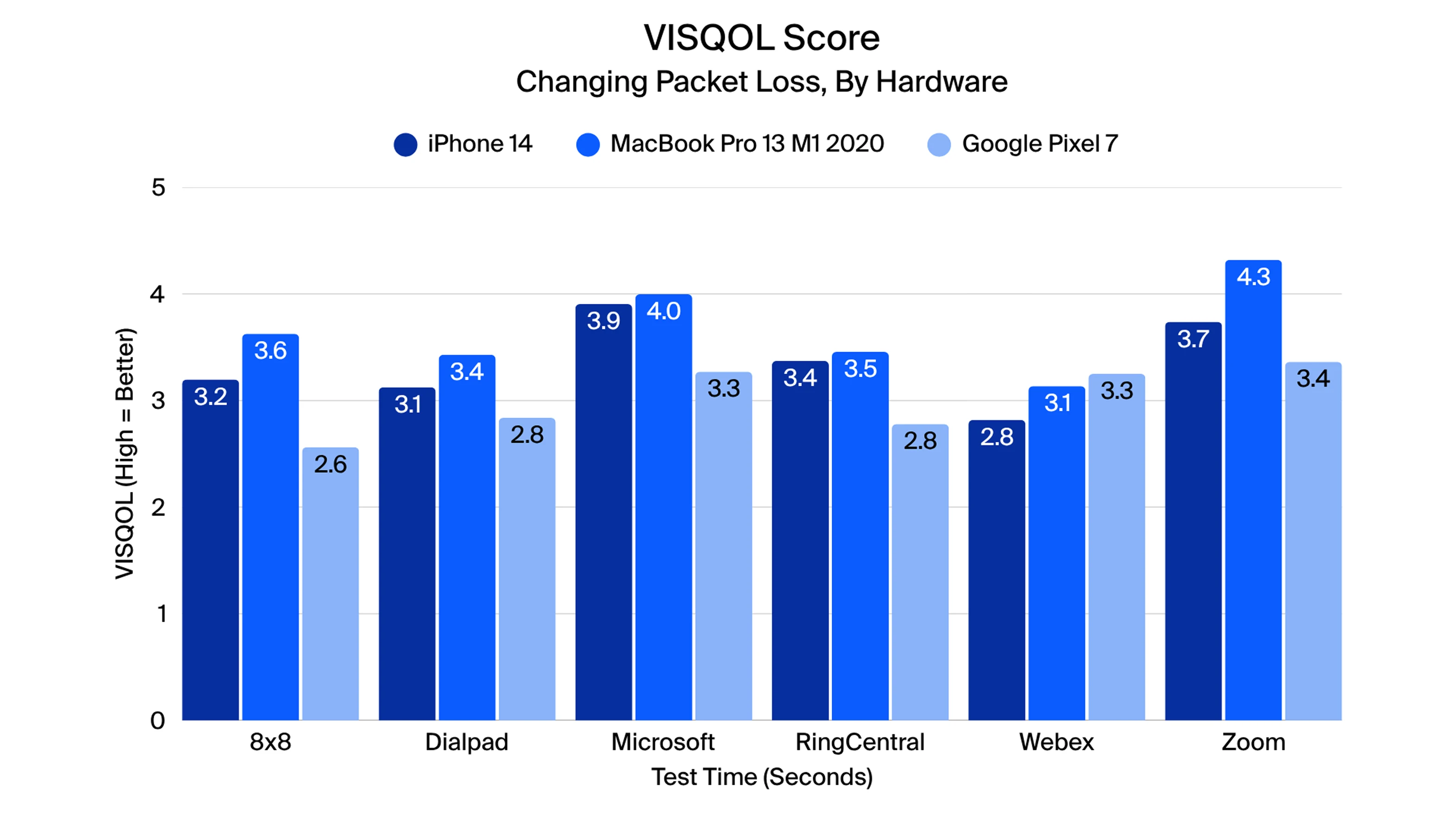
During increasing packet loss, Zoom retained strong audio quality, with only a slight increase in audio delay as network conditions worsened. MS Teams introduced buffering at 10% packet loss, significantly increasing end-to-end delay. VISQOL results correlated with POLQA, reinforcing the trend that Zoom maintained superior performance.
Android
Zoom preserved high-audio quality throughout the scenario. While other apps occasionally had lower audio delay, this came at the cost of noticeably reduced audio quality. Zoom dynamically increased receiver-side network usage under high packet loss to maintain stable call performance.
iOS
Zoom maintained the best overall performance. Audio delay increased modestly with rising packet loss, while other apps like MS Teams experienced sample gaps despite VISQOL metrics suggesting otherwise.
macOS
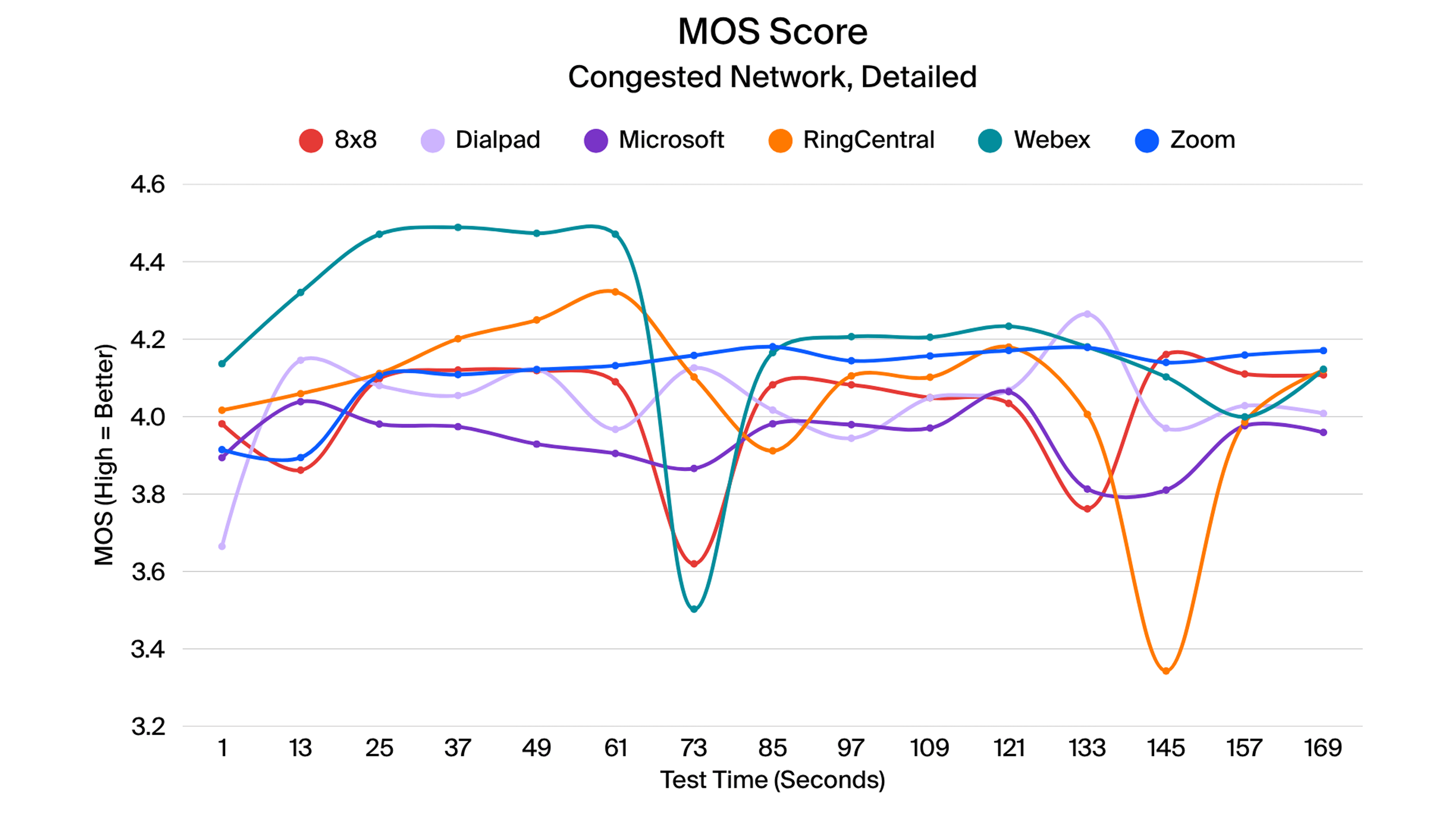
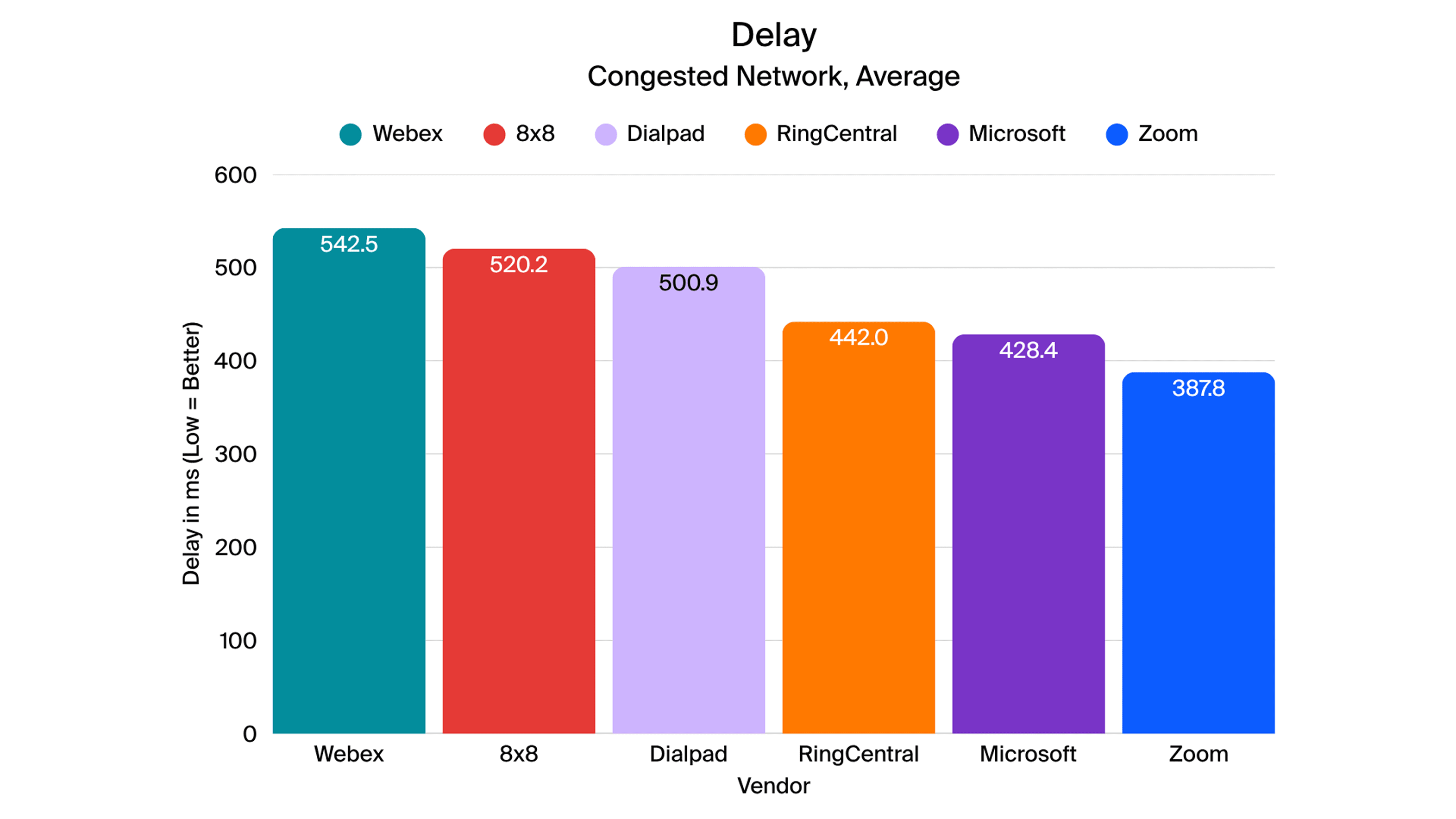
Zoom excelled in maintaining stable audio quality and low delay during periods of network congestion. Webex and 8x8 were most affected, showing notable dips in quality, while other platforms maintained consistent performance.
Android
Zoom again preserved call quality under congestion. Webex and RingCentral showed reduced audio quality, though audio delay spikes were similar across all apps.
iOS
Zoom maintained quality, while Webex and RingCentral were the most impacted. Overall, Zoom demonstrated the lowest end-to-end audio delay among competitors in congested conditions.
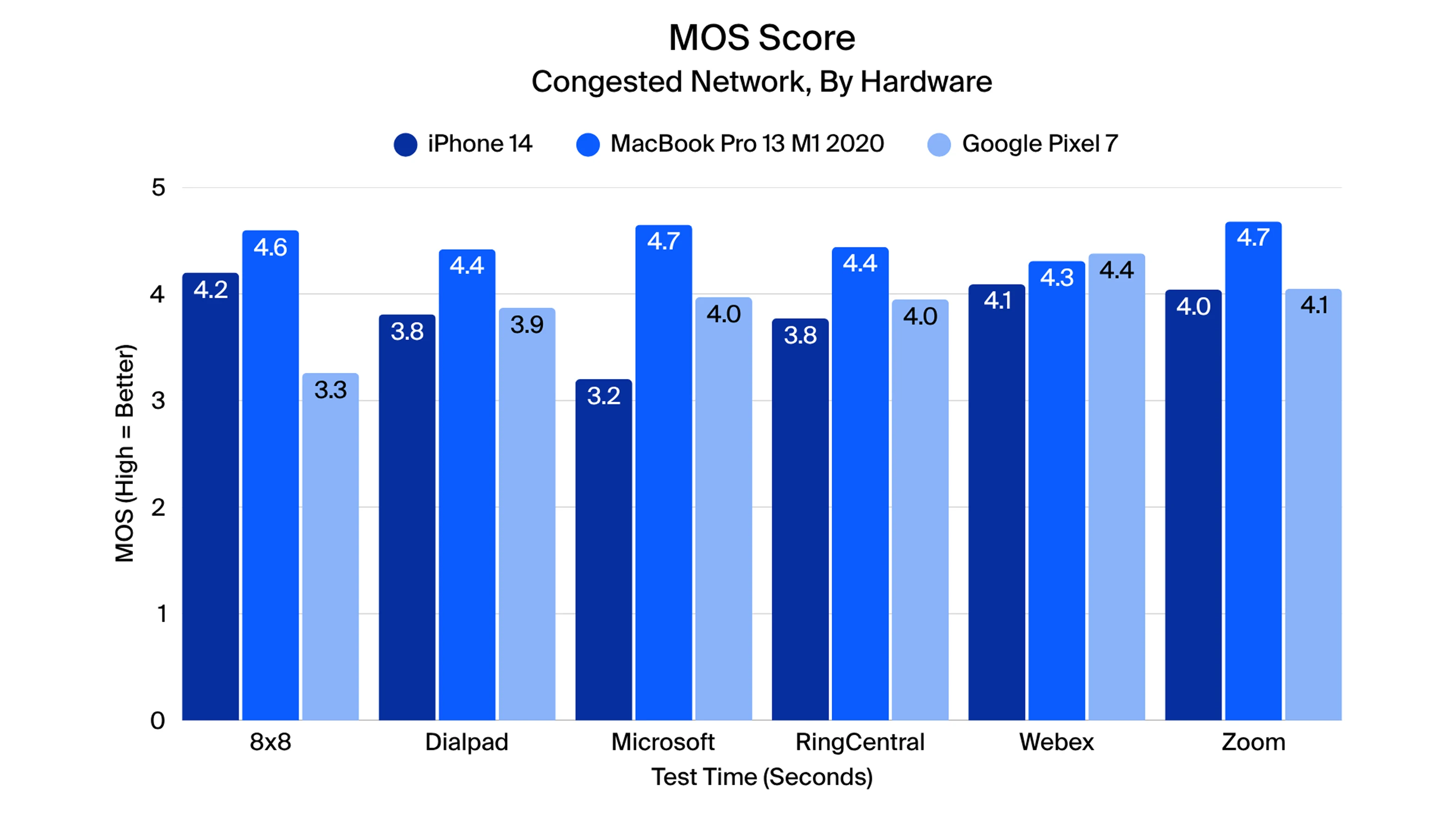
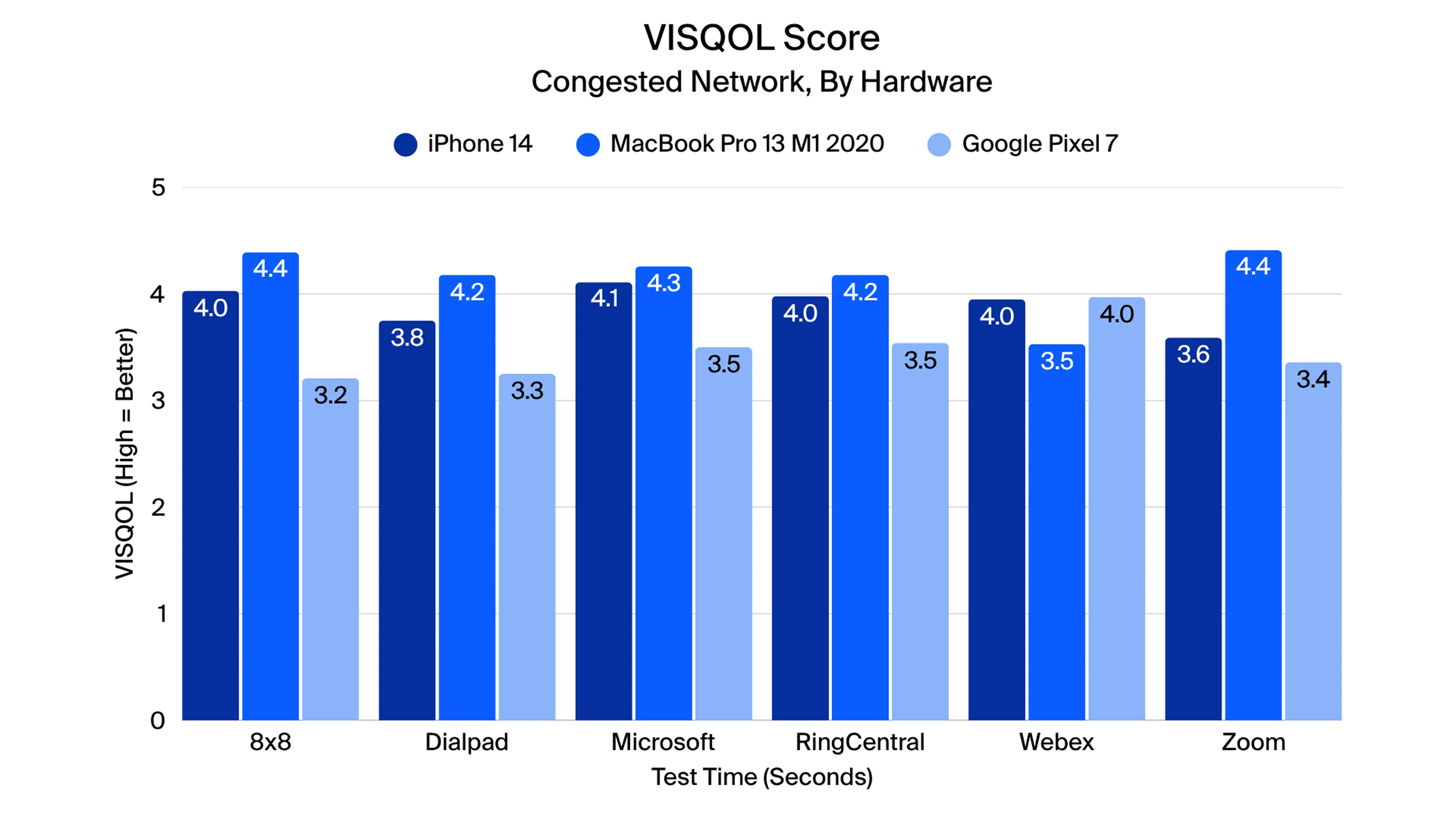
Across all tested platforms and scenarios, Zoom consistently demonstrated strong audio performance and reliable call quality. Under baseline conditions, Zoom delivered some of the lowest end-to-end audio delay while maintaining excellent POLQA and VISQOL scores. During challenging network conditions, including increasing packet loss and congested networks, Zoom outperformed the competitors included in the study by preserving audio quality and minimizing delay, demonstrating efficient handling of network impairments.
Overall, Zoom’s performance highlights a combination of stable audio quality, low latency, and resilient handling of network and environmental challenges.
Key strengths:
Zoom’s performance demonstrates its ability to deliver a seamless high-quality audio experience even in adverse network conditions, making it a strong choice for professional and enterprise communications.