How often do you turn your camera on during virtual calls? New research indicates that turning video on leads to not only team benefits but also important professional benefits for individuals.
We get it – you’re tired of being on video calls all day. After an extended period of remote and hybrid work environments, we know video meeting fatigue is real. We can all be excused if we pass on a meeting or simply turn our cameras off now and again.
Additionally, a prolonged remote work environment, with little in-person face time with supervisors, execs, and colleagues, can leave even the most confident employee unsure of where they stand professionally. So it’s fair to ask:
We surveyed U.S. workers using audio and video communication platforms to connect with colleagues and customers on their communication habits. We learned that even after many of us have relied on video communications for the better part of 18 months, professionals across industries believe there’s significant value in video meetings, and specifically, in turning their cameras on during those meetings.
According to the survey, commissioned by Zoom and conducted by Morning Consult, “video on” helps people increase productivity, engagement, and trust. It can also help improve your boss’s or colleagues’ overall perception of you as an employee.
But it’s all about balance, and choosing when and where to use video is often the key. In fact, 71% said that information on some video calls would be better sent in a chat or email.
Read on to discover when people turn video on during virtual meetings, when they don’t want to, and when you should, too.

While video conferencing has been an important part of the professional atmosphere for years, the COVID-19 pandemic rapidly increased the value of professionals being able to speak with colleagues and clients “face-to-face” via video conferencing without actually being in-person.
Zoom and Morning Consult collaborated on a study to investigate how turning on the camera during video conference calls affects things like engagement, productivity, and feelings of connectedness among employees, their colleagues, and clients. This study also reveals how video on can often positively impact how others, including your manager, perceive your performance.
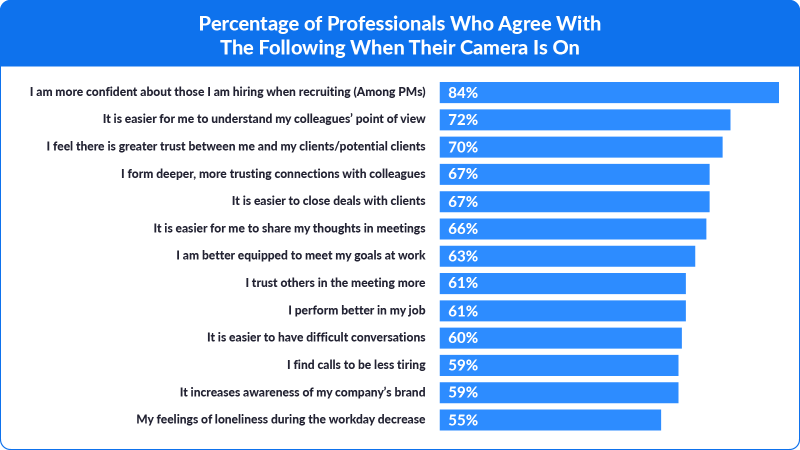
The majority of professionals feel that having video on during video conference calls:
What we knew about working remotely changed dramatically in 2020 and continues to evolve today as organizations strive to safely reopen offices, simultaneously support dispersed teams, and maintain a collaborative work environment for all.
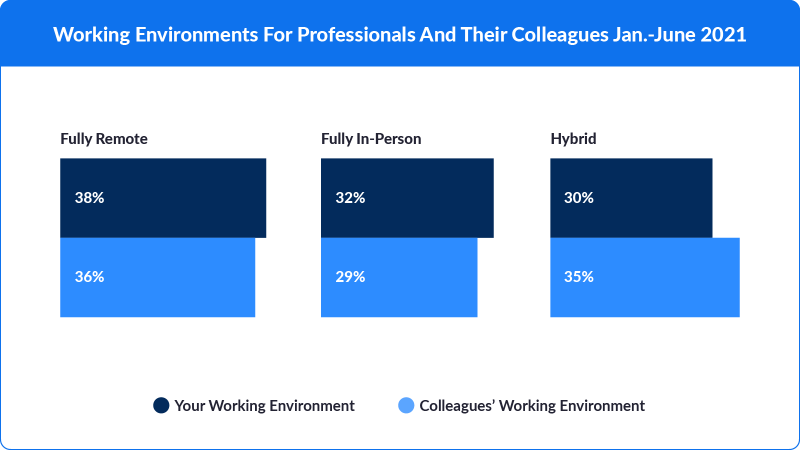
Video communication was critical in the first half of 2021, as more professionals reported working in a fully remote environment than in a fully in-person or hybrid one. (In the survey, “hybrid work” was defined as “work that is done partially in an office environment and partially in a remote setting.”)
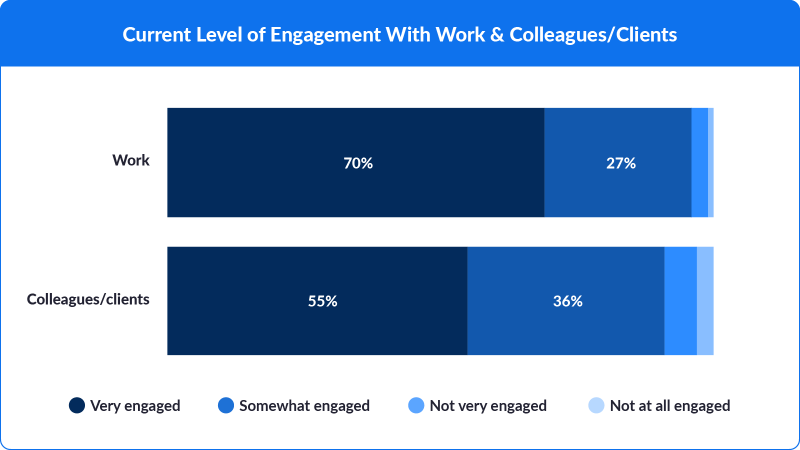
Most of the people surveyed do feel very engaged with their work (70%) and with colleagues and clients (55%), no matter where they work from, which can be viewed as a testament to the power of technology to keep distributed teams connected and productive.
A hybrid working environment is the most desired for professionals in the future, but it’s worth noting that many professionals have interest in continuing to work in the same way they have been.
We all have our own preferred communication style, but the survey results indicate that the interaction and who we are communicating with tend to dictate when those preferences surface.
When working remotely, the research suggests there’s a stark difference between how we communicate with colleagues and clients and how we want to communicate. The type of interaction generally drives how professionals prefer to interact with colleagues/clients, either remotely or in person.
It’s probably no surprise that the survey found that:
If a chat does require broader communication, solutions like Zoom Chat allow you to elevate the conversation to a Zoom video meeting with a click of a button.
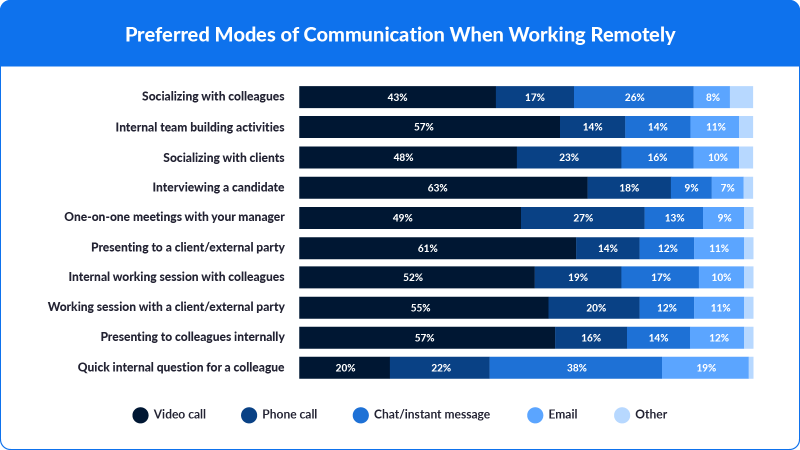
In the event that an in-person meeting is not possible, the majority of professionals prefer to video call in a wide range of circumstances, including interviewing a candidate, presenting to a client/external party, and internal team building activities.
When working remotely, professionals prefer a video call over other modes of communication when:
Seeing actually is believing, and there’s value to turning your camera on for specific calls or meetings, according to the research. So when do we think it’s beneficial to have video on during our virtual calls?
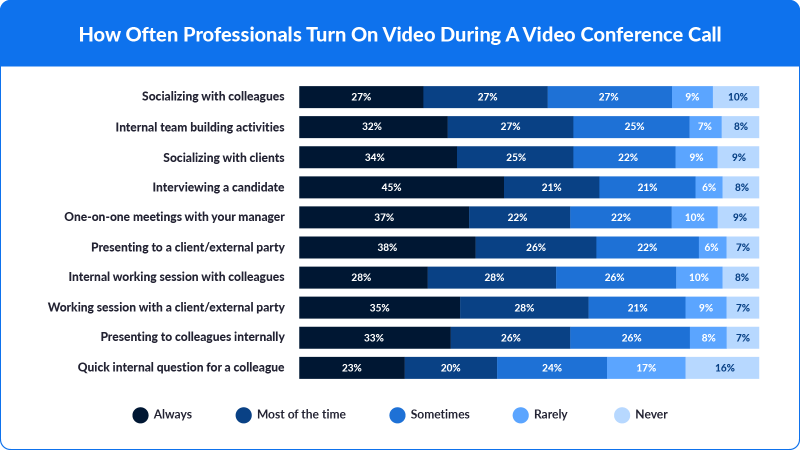
Those surveyed say they turn on video most of the time or always when:
The survey suggested that people are least likely to turn video on when they have a quick internal question for a colleague.
Notably, “video on” was important to the success of specific business processes:
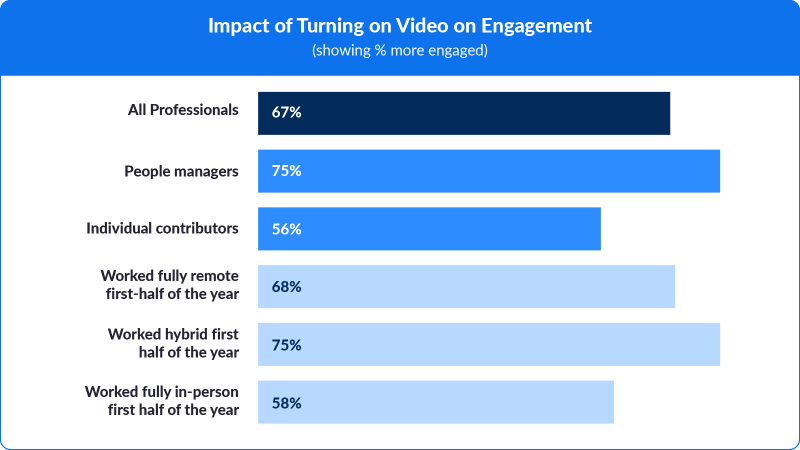
The main reason people feel more engaged when their video is turned on – by far – is the ability to see people’s faces and body language.
Other key reasons people report feeling more engaged when their videos are turned on:
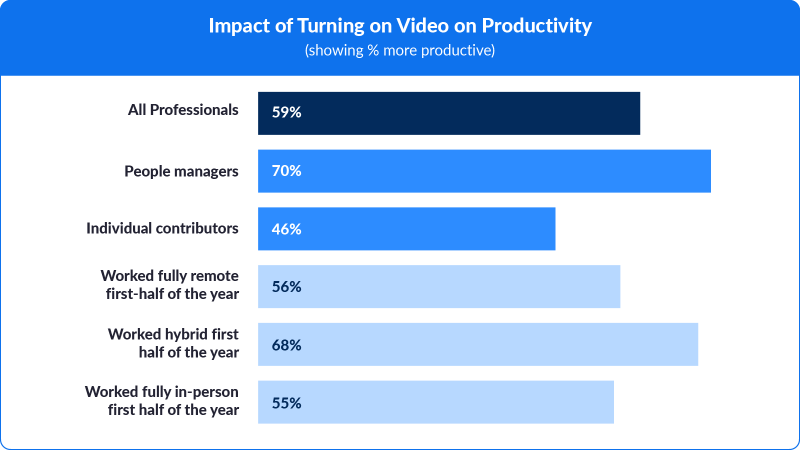
When it comes to getting actual work done on video meetings, the majority of professionals feel more productive when turning their cameras on:
Having video on during calls increases trust in a number of ways: professionals have greater confidence in hiring the right people, feel it is easier to understand colleagues, and have greater trust with clients and colleagues.
In a remote working environment, it can be challenging to showcase yourself as an engaged and productive employee. According to the survey, meeting on camera with your managers and colleagues can make that easier.
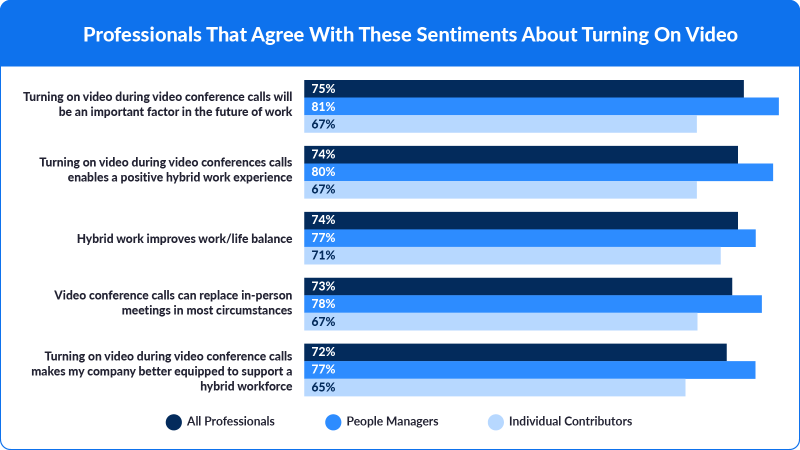
Video communications aren’t going away. In fact, 75% of professionals agree that turning on video during virtual calls will be an important factor in the future of work. And nearly the same number (72%) believe turning video on makes their companies better equipped to support a hybrid workforce.
Engagement, trust, and productivity all increase when we meet with colleagues and clients over video. Few people surveyed believed mandating people turn their cameras on for every call, but the data suggests that
embracing a “video on” culture can benefit individual contributors as well as broader business teams.
Reliable video conferencing is core to a successful “video on” culture, but just as important is understanding that not every interaction has to be a video call. Having a communications ecosystem in place to support
flexible business collaboration – and all the ways people want to communicate – will set you up for success.
Zoom provides industry-leading video, chat, phone, workspace, and event solutions to enable all the ways your teams need to communicate.
An online survey was fielded from August 23 – 30, 2021 among 1,179 US professionals that used audio/video communication platforms like Zoom prior to the pandemic at least once per month (for the rest of the results described as “professionals” for brevity). In this study, workers are defined by the environment they worked in from January-June 2021 (for example, someone who worked in a hybrid environment from January-June 2021 would be described as a “hybrid worker”).
The sample is unweighted and approximates the demographics of this group in the US. The margin of error for this study is approximately 3%.