As chatbot technology continues to evolve, there’s no question that the availability and quality of chatbots have reshaped consumer attitudes.
Sixty-seven percent of consumers have used chatbots at least once in the past year and 42% are comfortable using them.
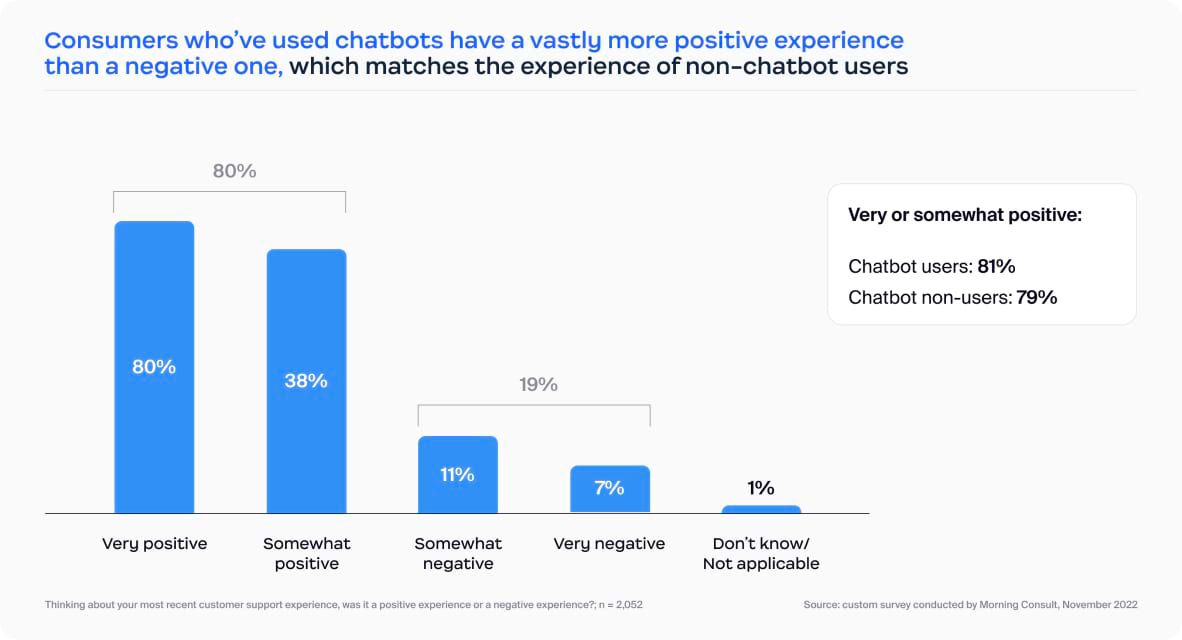
Consumers who’ve used chatbots have a vastly more positive experience than a negative one. Eighty-one percent of chatbot users say their most recent support experience was positive.
Yet among those who use them, just 29% say chatbots successfully resolve their issues “often” or “always,” showing that there’s still room for improvement in the quality of chatbots.
Although a majority of chatbot users (60%) say they often or always need a handoff to an agent, fewer (43%) are often or always able to reach one — a confirmation of the widely held belief that companies and agents are “hiding behind” chatbots.
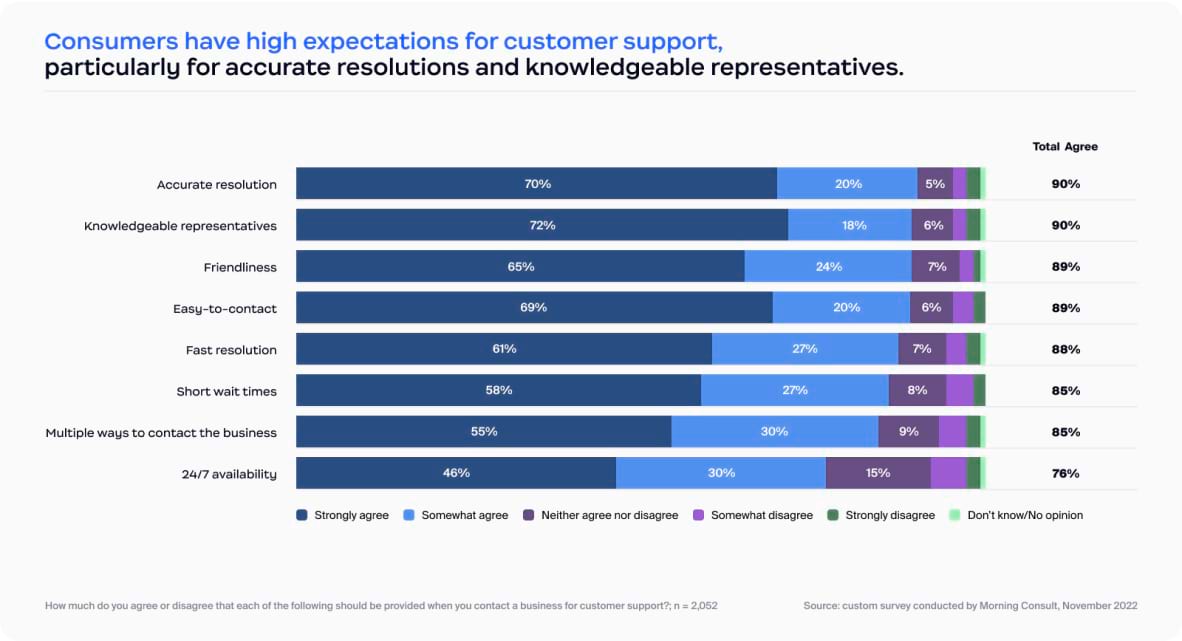
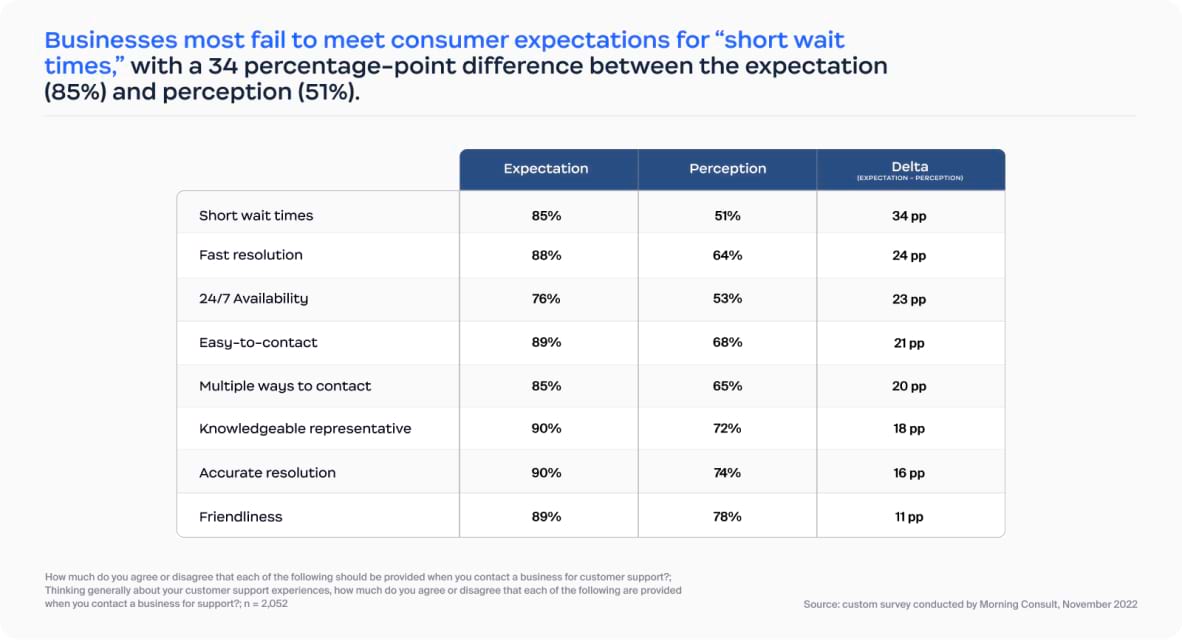
Chatbots are viewed as the best choice for short wait times and 24/7 availability, areas in which support is currently failing to meet overall consumer expectations. In fact, 67% of chatbot users said 24/7 availability was one of the top three advantages of a chatbot, and 34% ranked it as the number one advantage, followed by short wait times and convenience.
At the same time, more than two-thirds of chatbot users (68%) said one of the top three disadvantages of a chatbot was its inability to understand them and 27% ranked it as the top disadvantage — another signal chatbot technology isn’t yet matching consumer expectations.
Chatbot inability to understand requests may explain why consumers may still view chatbots as reliable only for the basics. The most preferred scenario for using a chatbot is resetting a password, while email support was preferred for the reset by more than 1 in 3 consumers (34%).
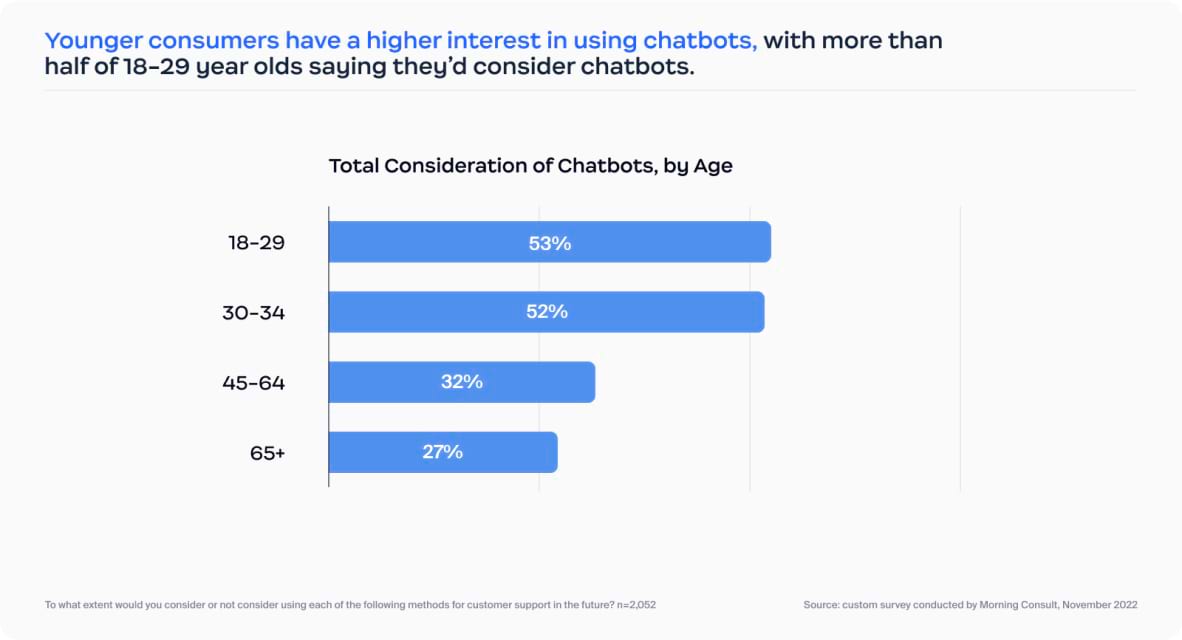
Younger audiences have a higher interest in using chatbots. More than half of consumers aged 18-29 said they’d consider using chatbots for customer support.